
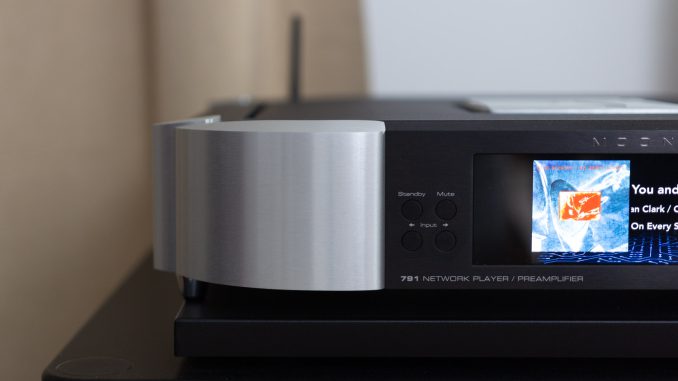
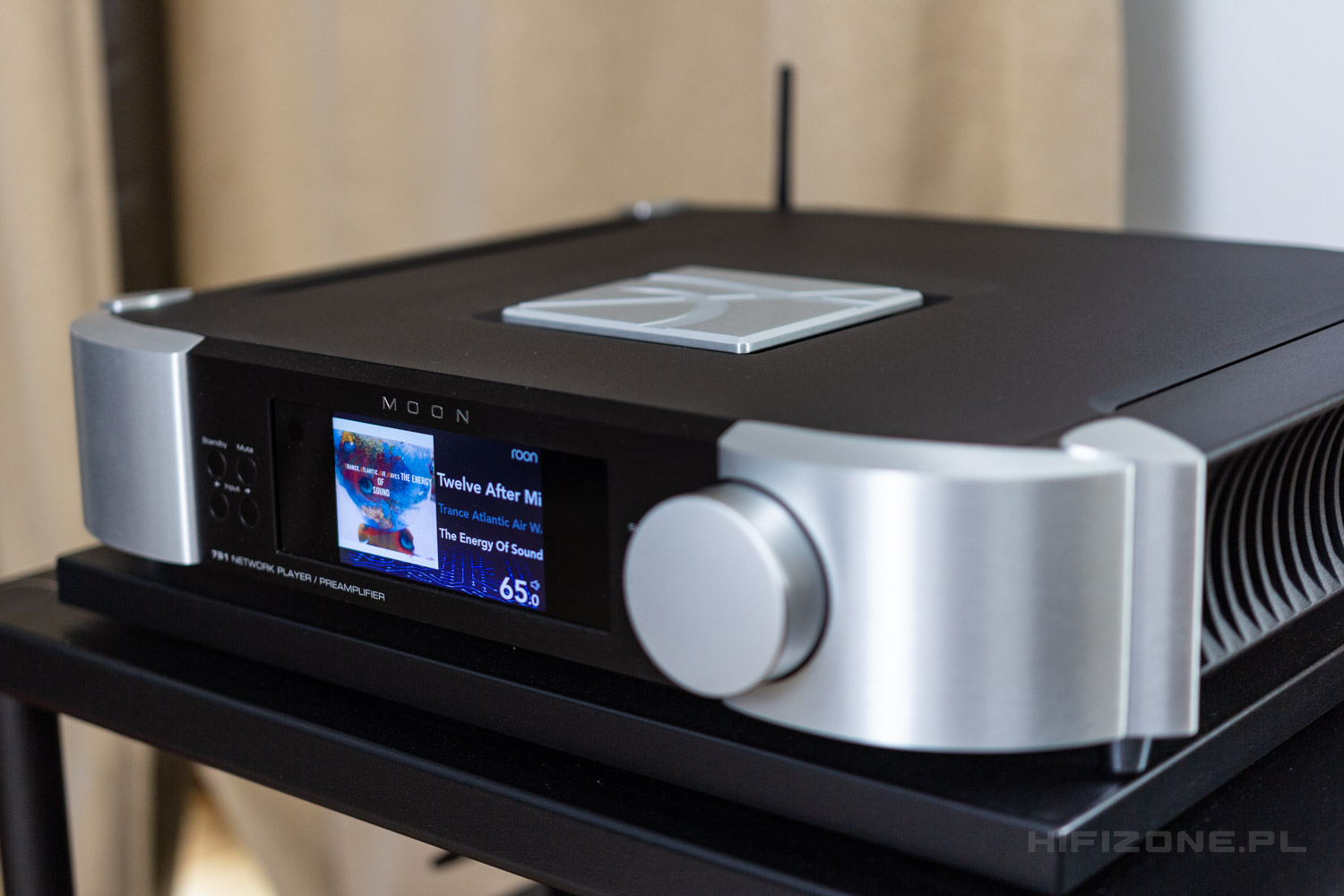
Moon 791 is a network player, digital-to-analogue converter and a preamplifier, all enclosed in one very distinctive yet simply beautiful chassis. You only need to add – equally adept – power amplifier (and speakers, of course) to complete a seriously capable audio system that would be fully worth of the “hi-end” designation. Therefore, we decided to review the 791 together with the Moon 761 – a corresponding power amplifier that is not only visually matched to its source sibling, but is also a part of the same collection of meticulously crafted audio gear. Yes, collection, since the manufacturer firmly states that The North Collection – to which both the 791 and the 761 belong to – is something different than just another product line.
When you consider the fact that the Canadian Moon by Simaudio is not a company that takes introducing new products lightly, you can have a notion of what this could in reality mean. It is a big news indeed, especially in the light of the fact that we have here seven – if we count in the BRM-1 Intelligent Remote Control – new components so far (more on that later) that all share the same traits. And, obviously, the deeper idea behind them.
When I asked Costa Koulisakis from Simaudio about the whole concept, his answer was very clear:
“At Simaudio, we do not change our products often. It has been 18 years since we launched a whole series of flagship-level gear. Of course, some new models popped up along the timeline but an entire range of new, 600+ level gear? Yes, it has been 18 years. During all this time we learned, discovered and created a lot of new ideas and technologies, and the only way to finally implement them all is in a whole new range of top-shelf products. To give them a unique identity and differentiate them from the rest of the MOON lineup, we call them the North Collection.”
But there’s obviously much more to it, as another Gentlemen from Simaudio – Dominique Poupart – explains from a slightly different, yet even more interesting angle:
“In the past, MOON models with numbers 600 and up were mostly models with single purpose; Like dedicated phono preamp, line level preamp, DAC, power amp etc. We claim then it was the best way to obtain the best sound quality. In the last few years, we have understood a clear customer desire to start reducing the number of boxes required to create a high-performance high-end system. And we have worked on that. We have found ways and developed the ability to design product in which the combination of features, Digital and Analog Audio within the same product can be built in a way that it does not represent a performance compromise in any way. For example, the 791 is a better analog preamp than the pure, analog-only 740P. And this starts in the North Collection. Fewer boxes, modern features and even better sound!”
In times, where even the hi-end audio world is changing, with the prevalent streaming platforms and abruptly shifting customers’ expectations – this is bold, yet still very clever move from the Canadian company, whose products have visited us before. Some time ago, we reviewed an all-in-one integrated called ACE, followed then by two of Moon’s integrated amps – the 600i V2 and then 250i V2. Each of those components left a very good impression. But, before we come to the gist of this review, I would like to make a small excursion here. From what I’ve not only heard, but from everyday operation too – I can fully understand why Moon doesn’t rotate its products every two years. If we leave the sound aside for a moment, the thing that still lingers in my mind regarding each and every Moon product that I laid my hands upon – was that it was complete. Complete in the way that every function worked, everything was right in its place and if something, any particular functionality was implemented – it was implemented well.
Since I cannot stress this high enough, let me put this, for the sake of clarity, into a bit wider perspective. As a reviewer, my exposure to equipment is rather different, and I tent to notice some slight differences between devices which – at least very often in theory – should all behave in exactly the same way. Well, the reality is very often, to put it diplomatically, different. And it’s mostly those small details, usually associated with day-to-day operation that make the whole difference.