
Moreover, there’s another side of the coin: many companies nowadays treat the DAC chip choice as their main selling points. Which is, I dare to say this, detrimental to both the customers and the industry. Since it leads to somehow pointless arms race without actually pushing the envelope.
Going back to the 791 itself, it is also worth mentioning that we have here the MVOL3, which is a Moon in-house developed volume control, now in its third reiteration:
“The M-VOL3 volume control employs even better semiconductors than the previous design that was used in the 740P. Those parts did not exist at the time. It makes an appreciable difference. The rest of the circuit for the analog preamplifier is almost the same as the 740P.”
Then there’s that thing with the integration. Usually, we tend to see the separates that do only one particular thing as those that achieve the very best at it. And the Moon seems to have taken a bold approach, combining three different units (if you consider phono preamp, then actually four) into one chassis. When asked about how do they see achieving stellar performance this is their answer:
“The most important is related to the internal galvanic isolation between the whole digital section and the analog sections. This makes clear difference. Of course, also completely separate power supplies for each section. Then electromagnetic interference isolation using clever mechanical disposition are important also, as the whole global design. Note that there are also benefits to the integration, mostly the avoidance of “going out” of the unit through an interconnect cable and then going into another device. This avoids the cables but also additional output and input stages at both end of the cable that can be irrelevant in an integrated device. Also, the output level and impedance can be at the optimum values for the next stage.”
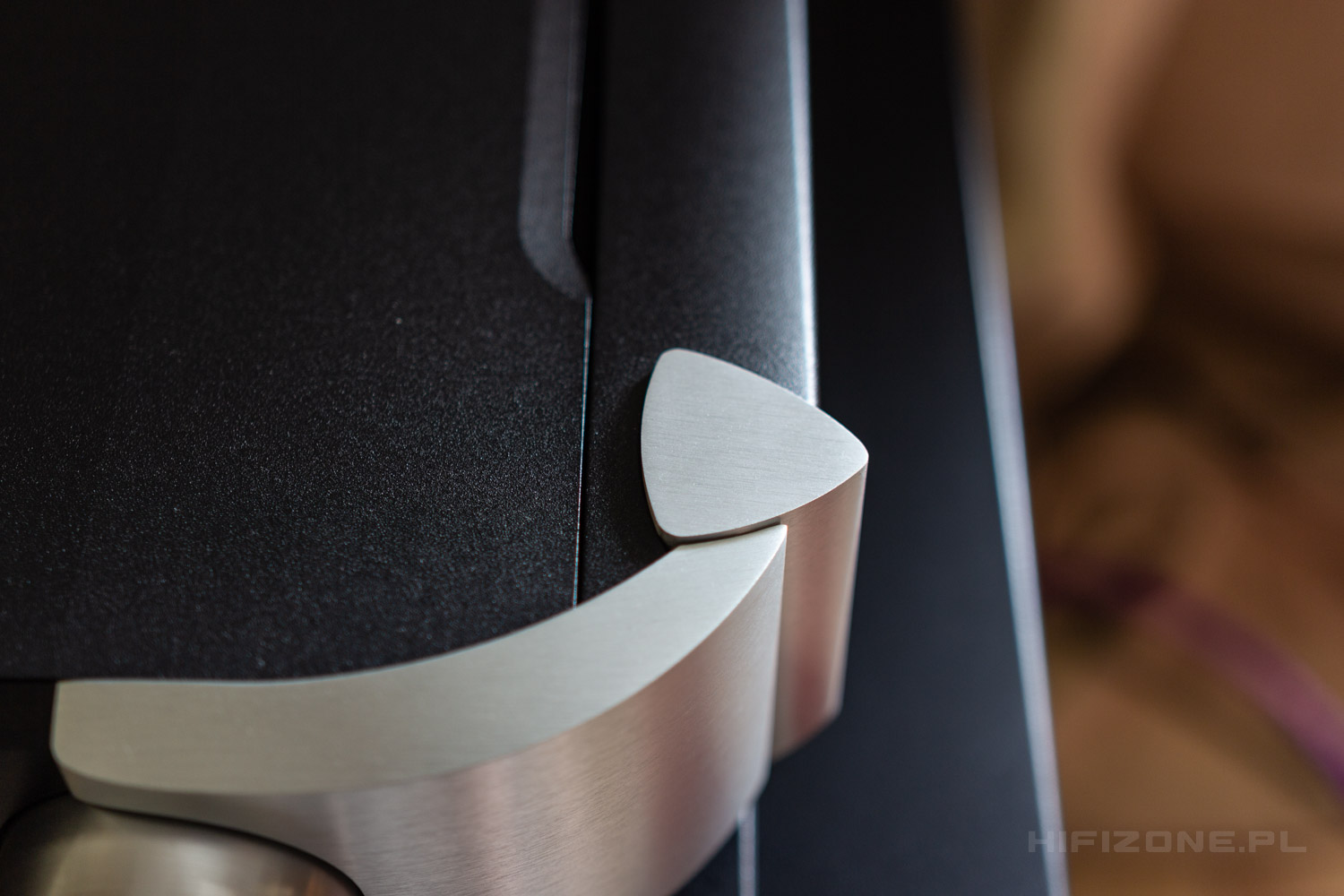
Here’s an interesting point that sheds a light on the whole integration vs separates debate. Please notice the part referring to the output and input stages. While many try to actually avoid acknowledging this – there are some cases in which going for a higher level of integration can be beneficial to the audio path, thus the signal. Less stages in the audio path and better control of how do those stages actually work and interact together – this is always a virtue.
One thing with the 791 that can be done “outboard” becomes clear when you take a closer look at the back panel. You have the sockets for plugging in an additional, external power supply unit.
“The 681, 791 and 891 allows the use of external power supply. The already existing 820S can be used, but we will produce a new power supply in the future that will be part of the North Collection of products, with matching looks. Please be patient though, it will take some time; we always prefer to refine the product before putting it on the market. There are two different connectors as there are different connections for different purpose. One is powering the digital section of the product, and the other is powering the analog sections. The requirements for each type are not the same.”
Before we take a closer look at the 761, just a few things more about our source component here. First, Moon uses a hi-resolution display that is a welcome addition. The other, you will need a relatively wide stand for it, since the feet are quite apart in the terms of width. The third one – it’s also quite deep, but this is nothing surprising at this level of performance (and price).

As for the operation and the menu, everything that you might need is here. You will find the ability to switch between the XLR and RCA outputs. As well as set the maximum output level – which will be very handy when using the 791 with power amp. As Costa told me, the only thing left from previous Moon models was the volume knob. And judging from the feeling of it – for a good reason.
Moon 761 power amp
This power amplifier also belongs to The North Collection, and is a worthy partner to the 791 on its own terms. When we look at its position in the whole line of Moon’s products – it’s actually quite at the top. Since there are only two models above it: one is the Moon 861, which is even bigger power amp, also new and from The North Collection. And there still are the tour-de-force ultra hi-end 888 monoblocs that are sitting at the summit of Moon’s amplification hierarchy.
Yet the 761 is no slouch itself, weighting over 35 Kg, with its true dual-mono construction that sports separate custom 800VA toroidal transformers, one for each channel backed up with over 152,000 uF of filtering capacitance. This translates into 200W per channel into 8 ohms with the ability to double that power when the impedance drops a to 4 ohms. This speaks volume about the 761’s current capabilities and should allow it to drive almost any speaker on the market today, including some more esoteric planar designs.