
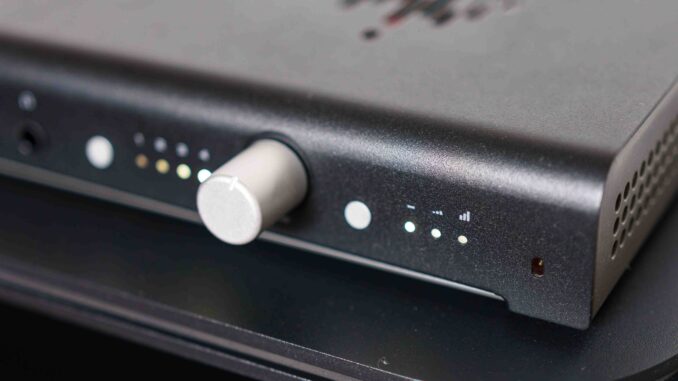
Schiit Saga 2 is an analogue preamplifier that is made by the American company that is well-known for making some really interesting and in many cases pretty affordable audio gear. Their cheapest active (we will get to this one soon) preamplifier is a great example, at least on paper, of reasonably priced audio gear that at the same time has a lots of interesting design choices inside. Take for example Class A and at the same time zero-feedback topology. While the former is actually quite common in the line-level world, the latter is something almost unheard of at this price level, which by the way is 279 USD at the time of writing.
Moreover, Saga 2 also sports a fully discrete design, meaning that it has none of those operational amplifiers in the signal path that many would like to steer clear of. Add to that 75V voltage rails, headphone output and a resistor-ladder volume control and you can start questioning yourself how the company from Texas did manage to integrate all of those things while keeping it so affordable. Especially the zero-feedback discrete design is something that is unheard of in this price range.
What’s even more interesting is the fact that this particular preamplifier is the second from the bottom, below it is the USD 49 priced SYN that is actually more of a volume potentiometer placed inside a small case. Above in hierarchy is Kara F that retails for USD 799 and then you have a thousand-dollar top-of-the-line Freya+ F. The latter one is interesting, since it has both vaccum tube and solid-state gain paths. Yet I’d like to emphasize one thing here: the tube stage in Freya+ as well as Freya+ are both feedback designs. That at the same time means that the Saga 2 is actually something very interesting, since if you really want the no-feedback preamplifier from Schiit – you can go with the Saga 2 or reach for their most expensive contraption and its solid-state buffer (in this configuration Freya+ F doesn’t use feedback).
And the subject of the review in hand still has XLR outputs (since it’s a differential preamplifier), albeit no balanced inputs. That also means that as long and your source is sounding equally good via unbalanced outputs you’re all good. And it still will allow you to connect two bridged (thus working in mono configuration) Gjallarhorns 2, Vidars 2F or even Aegirs 2F to it via balanced outputs, which is another interesting story for a 279 USD preamplifier. So, from the theoretical standpoint, all is looking really good.
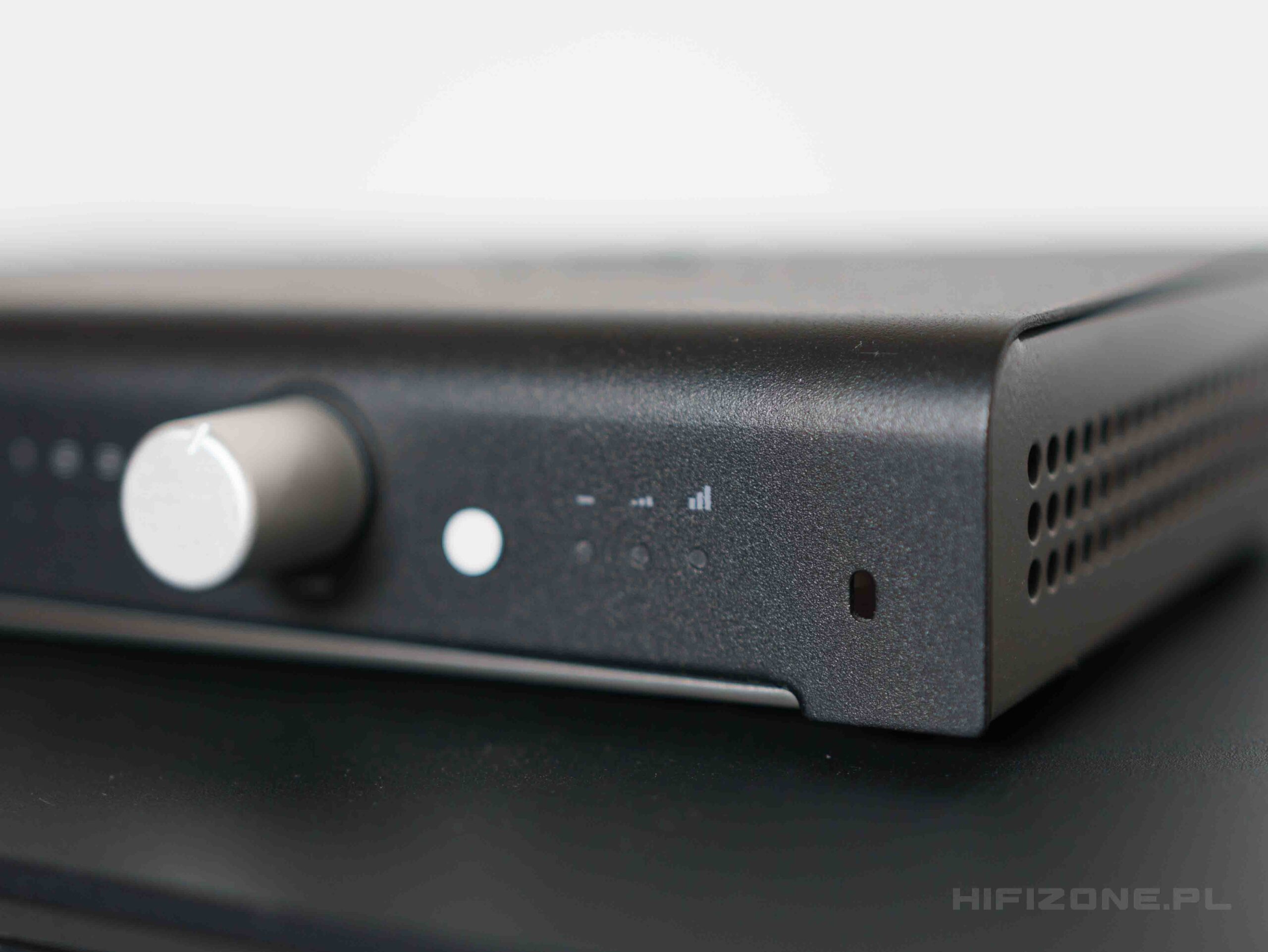
Yet, as always, the gist of the matter is the sound and whether all those purity-driven design choices will translate to the sonic prowess? It did happen with, for example, Aegir 2 that we reviewed some time ago. And it would also be interesting to look at this preamplifier from just another perspective. It just happens so that the Forkbeard allows the digital volume control on most of the Schiit’s digital-to-analogue converters. And since we already have the venerable Gungnir 2 at hand, it would be really interesting to see how such a solutions compares to no-feedback Class A classic design.
Schiit Saga 2 – some (interesting) design choices
Let’s start off with the physical form of this particular Schiit. It has the same width as (previously reviewed here) Gjallarhorn and Aegir power amplifier. And it comes in both silver and black finish as well. The big advantage here that may somehow be overlooked is that by the virtue of the fact that it’s half-width (compared to your usual main-system audio gear) it will easily find its place on most desktops too. And it will obviously stack pretty well with thing like previously mentioned Gjallarhorn power amp (that is actually perfect for a desktop-scenario usage) and new things like the Minim DAC.