
Since we already have the BRM-1 covered, let’s now focus on the actual stars of the show. In this case – the Moon 791 Network Player / Preamplifier and the Moon 761 Power Amplifier. Obviously, since there’s a lot more to talk about the former, so we’ll give a shot first and then take a look at the accompanying power amplifier. I would also like to note at this point that while I listened to the 791 stand-alone – I also did extensive sessions with the 791 and 761 as a system. That also gave some interesting insights, that I will bring to light just a bit later on.
Moon 791 Network Player / Preamplifier
In their marketing materials Moon states that the 791, being obviously a member of the new North Collection is much more than a serious analogue-only preamplifier, like the 740P for example was. As I briefly mentioned before, the 791 functionality is much wider. This is a full-blown network player, a digital-to-analogue converter sporting in-house developed MDE (Moon Decoding Engine) DAC technology, and a preamplifier with both phono stage and MVOL3 volume control. Just once glance at the back of the 791 shows us a full array of connection possibilities, together with the fully balanced line inputs and outputs.
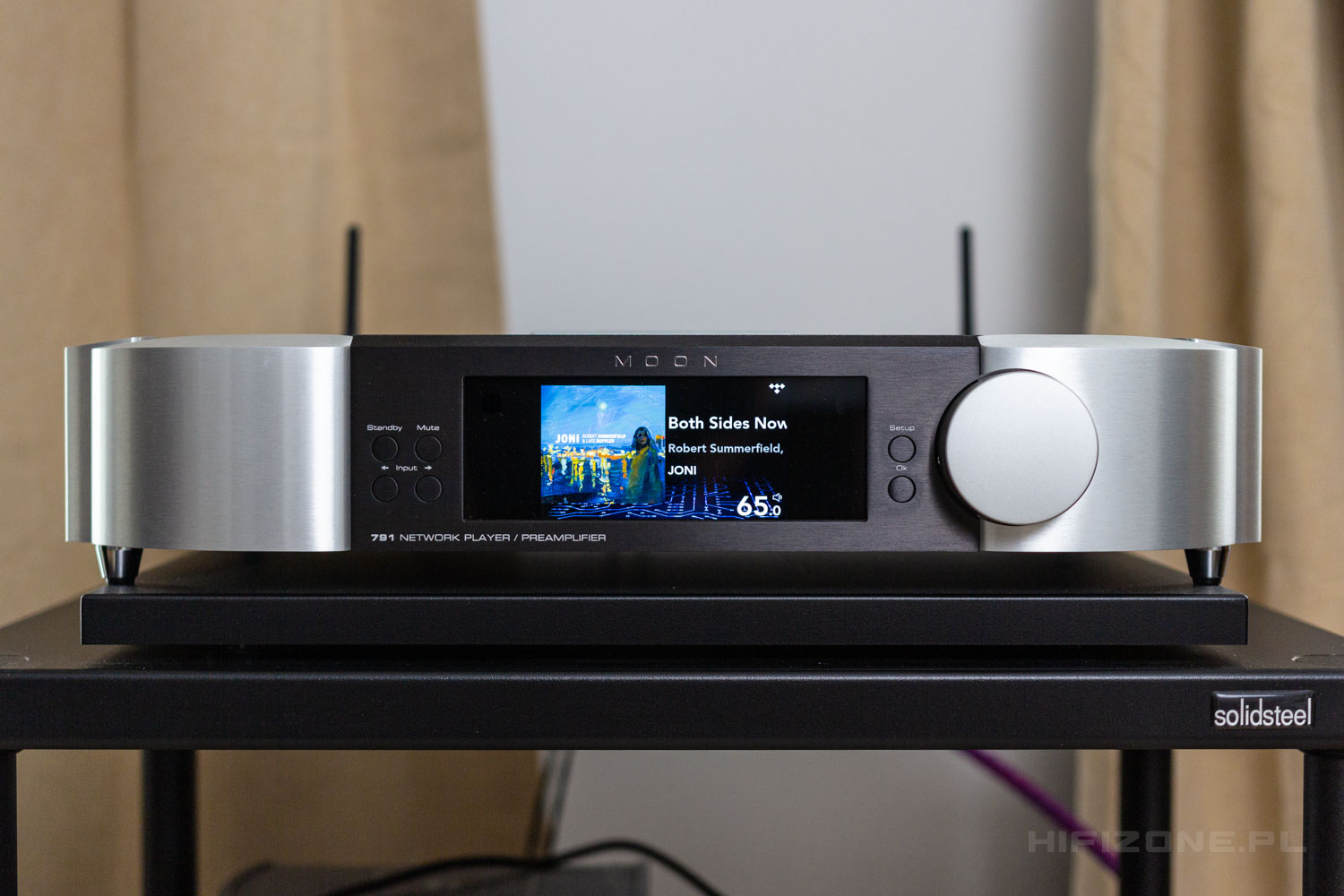
Starting with the network player, it’s all based on the company’s „MIND” platform and therefore offers everything that we can nowadays ask for. Roon Ready, check. Tidal Connect, check. There’s even an USB input if somebody would like to connect – for some reason – a PC to it. The connection to the home network can be via Ethernet cable or WiFi as well. As for the setup – it’s plain simple. And it just works from a get-go. Funny thing here, it doesn’t notify that the wireless connection has been established. It just connects and is ready to stream music.
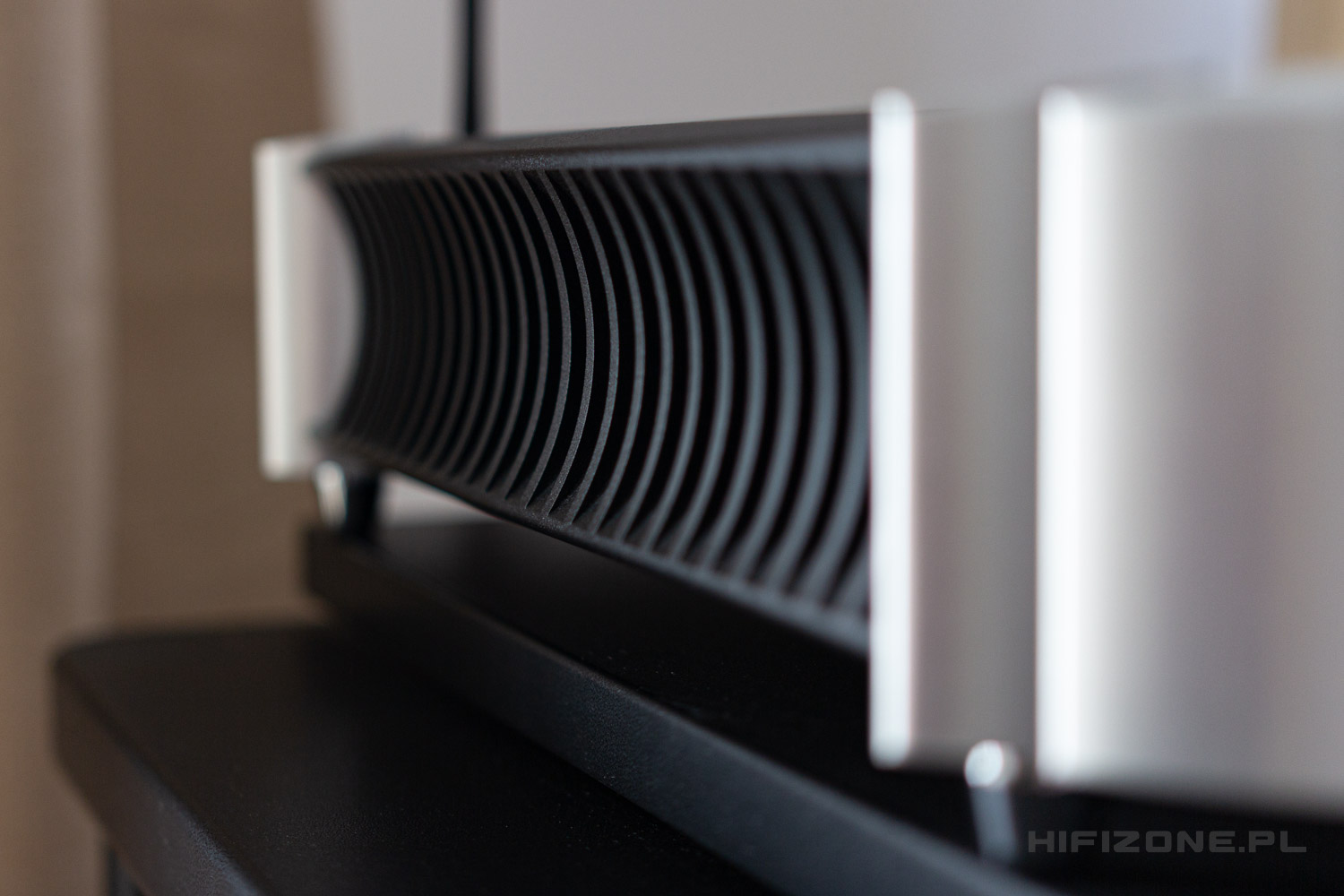
More interesting things are actually under the hood, since the DAC uses an interesting combination of DAC chip and an FPGA that controls it. When I asked Dominique Poupart from Moon about the whole concept of the MDE-2 DAC, this is what he answered:
“MDE stands for MOON Digital Engine. It is based on an FPGA and an ESS chipset. The FPGA achieves re-clocking with pico-second accuracy and two sets of four DAC channel outputs are summed in the analogue stage. “
And then explains in more detail:
“The digital audio signal represents zero and ones via the two different levels, but you can look at this signal as an analog one. Ideally, the signal would be very square with very clear transitions from one level to the other. But in reality it is much more rounded than people think which blurs the precise transition time. We use the FPGA in a way that can reclock the signal and also controls the rise time of the signal etc. It allows the DAC to perform at its absolute best. The quality from the digital sources are input agnostic as much as it can be.”
Interesting concept, especially bearing in mind the fact that Moon doesn’t brag about the choice of the DAC chipset itself (for those interested: it’s ESS 9038Pro). This is mostly because the whole philosophy of the company is that it’s all in the execution and application of a particular set of components, not the components themselves per se. This is of utmost importance, since I would like to notice one more thing here, that usually is very prevalent among audio enthusiasts, even those working in the industry. You see, it is very often associated that the chip A has this sound signature, while chip B has that and so on. And this all happens usually parallel to the general misunderstanding of how the entire circuitry around the actual silicon works in the context of providing a final sonic signature.