
And if we’re talking about the upgradeability, we also need to mention the Forkbeard, which is another own idea of the American company. While we do get a remote with the G2 that controls the basic functionality (source, phase and NOS mode), we also have the possibility to use the additional Forkbeard Bluetooth module that allows control from the iOS application (Android one is in the works). And with the latest Forkbeard upgrade, we do get some really interesting functionality. One would be the parametric, 5-band EQ that was mentioned right in the beginning of this review, the other one being the ability to work as a digital preamp. The last one is of special importance, since it will allow, as I mentioned, for a direct connection with the power amps. Some will say that the digital volume control may be inferior to the analogue one, but this will all vary with the actual setup and a few other factors. And such approach viability will obviously relate to the sound, so let’s move on to the next and quite possibly the most interesting part.
Schiit Gungnir 2 – the sound
It’s actually funny how many misconceptions are in audio that somehow relate to particular design choices that are more than often not so well understood, yet very often commented. I mention this, since I believe that with Gungir 2 we have on our hands quite a similar situation as with the Aegir 2 that I reviewed some time ago. What I actually mean by that is while this may be a Multi-Bit converter it doesn’t quite sound like your typical Multi-Bit one. Nor its sound reminds in general what can be associated with your usual AKM or ESS-based DAC. The same was with Aegir 2, which pretty well balanced what you could achieve with your typical (yet usually still very good indeed) Class-A solid-state amplification and the so-called high-resolution Class AB amps that were also designed to offer not only the timbre, but also a deep insight into the recording.
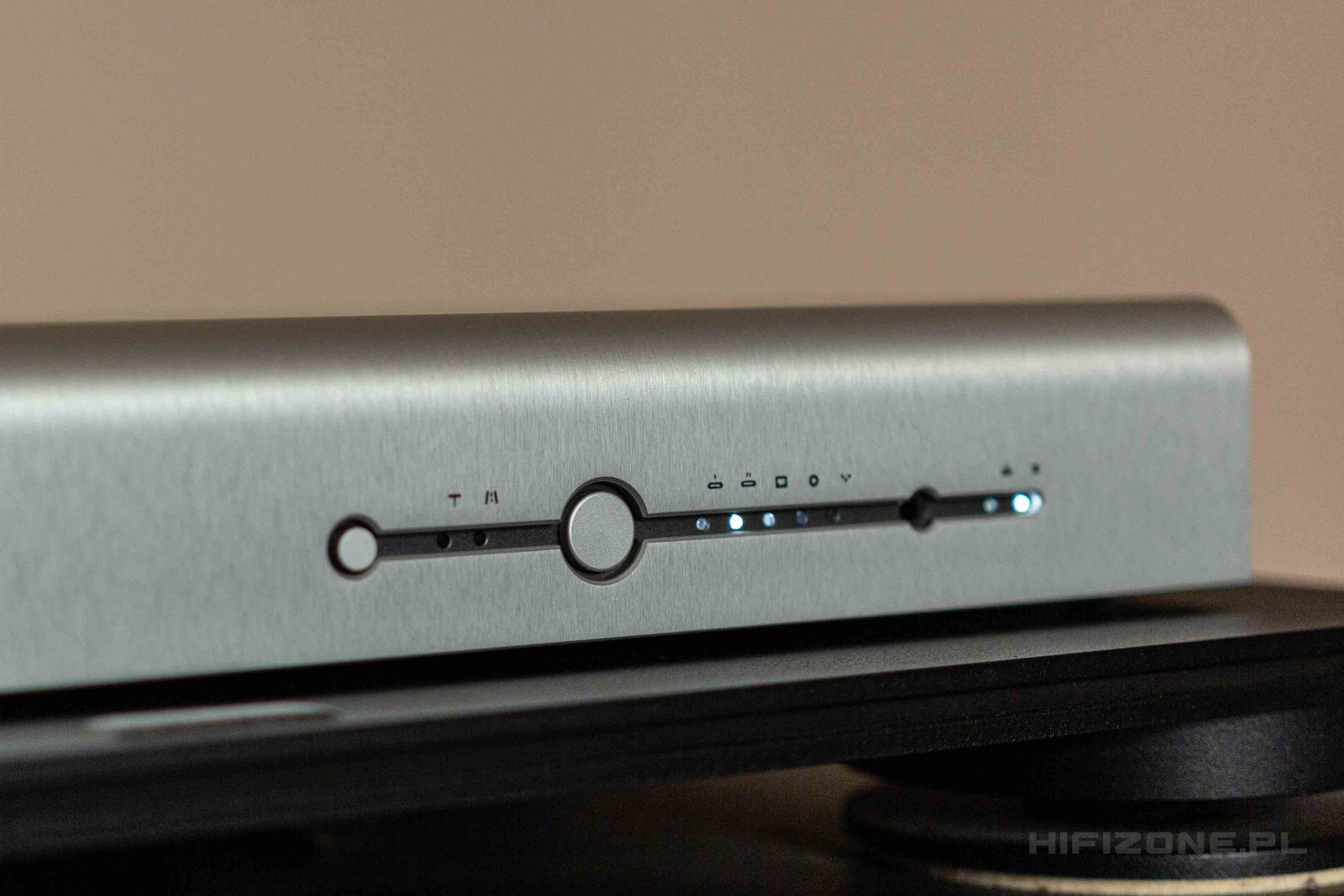
And before we get deeper into how the Gungnir 2 actually sounds, it would be good to mention that I listened to it in many different configurations, which is also of importance, since now – after the latest Forkbeard update – we also have the ability to use it as a preamp, which means controlling the volume in the digital domain. The latter one is sometimes associated with the lack of resolution, which is not the case here (more on that later), so the sound description will be somehow of a common denominator for both the volume set to maximum and using the analogue volume control (in preamp or integrated amp) and also when using the Forkbeard volume control in iOS app. Moreover, we also need to consider the fact that we can bypass the internal closed-form digital filter and go for an NOS mode here, which also changes the sound. And the last thing that we need to consider is that – at least in my opinion – it really needs some initial hours (I don’t mean warming up after switching on) to sound its best.
Getting to the gist of the matter, the most striking thing here is the fluidity of its presentation together with really great, yet not overly-analytical detail retrieval. Some of the multi-bit and digital-filter-less (NOS) DACs on the market tend to mimic that old TDA1541 (or PCM63) sound. Usually with good, but also predictable and similar results. And what you get here is actually something different. The thing with the Gungnir 2 is that you know that this is not your typical delta-sigma converter not because of the fact that there’s something in its sound that would remind a particular technology, but rather it’s the absence of both digital smear and a certain, often subtle, yet perceivable imprint that many of the integrated D-S solutions have. On Aimee Mann “One” (soundtrack from the great Magnolia movie) the voice in the intro was placed in a palpable way on the centre of the soundstage. And there was an immense feeling of it being rendered very direct, yet without any hint of harshness. Even on this first test track I had the notion that there was no veil between me and the performer whatsoever. There was also a profound feeling of both the depth and the width of the soundstage, which was both engrossing and reached actually far behind and beyond the speakers.
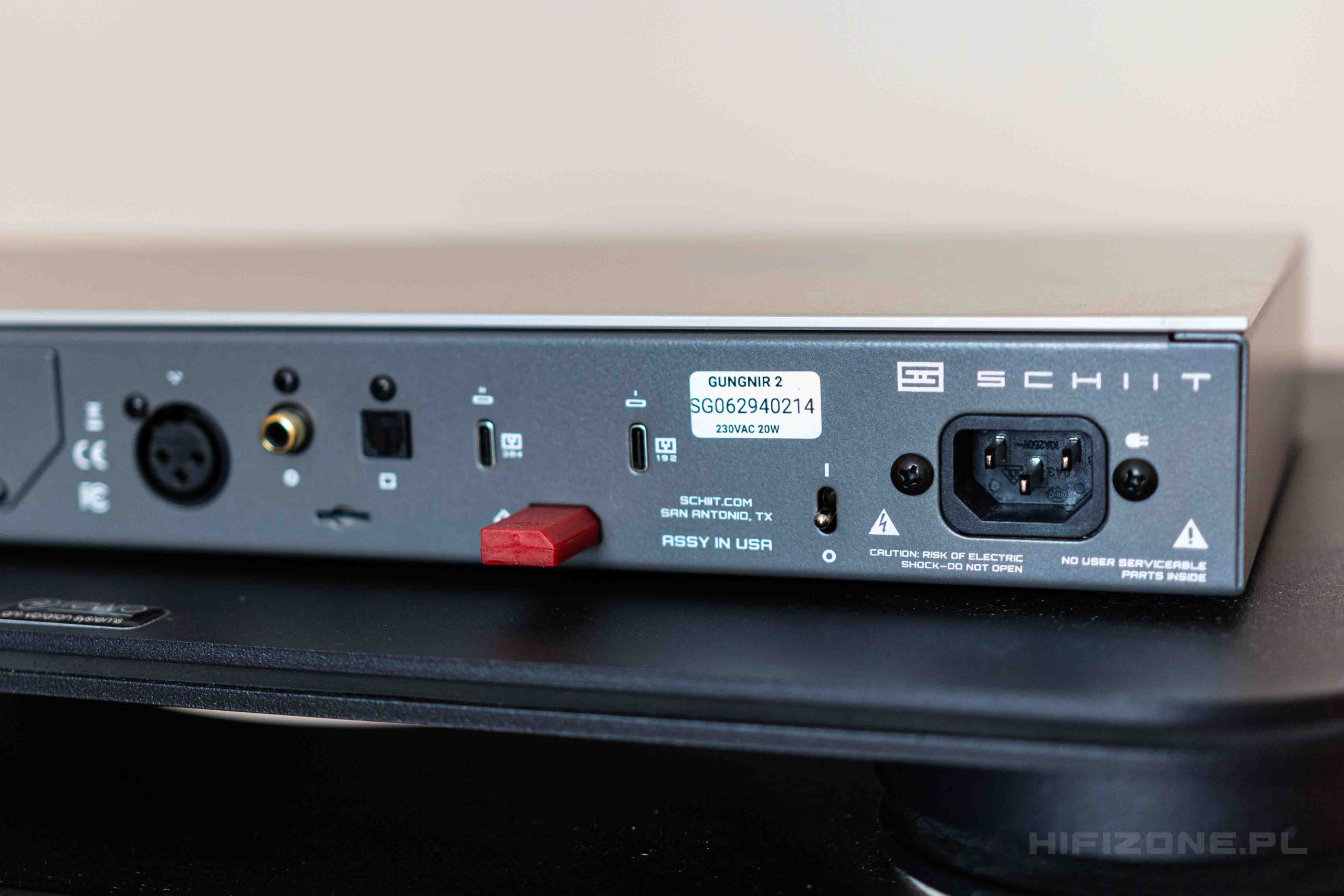
Intrigued by what the Gungnir 2 offered me on that track in the aspects of space recreation, I switched to the really well-recorded “Convergence” album by Malia and Boris Blank. On “Celestial Echo” American DAC simply confirmed its prowess in regards to throwing ethereal spatial images with ease. What’s more, it also confirmed that their implementation of the closed-form digital filter delivered nothing but very open and actually vast soundstage. Then there’s something more that I would like to mention here. In case of some converters, you can feel a slight haze, some kind of coating around the first layer of the soundstage, the one that is closest to the listener. Here the Malia’s voice on “Raising Venus” was close and rendered with both great palpability and natural timbre as well. The thing with the Gungnir 2 is the fact that it sounds direct, but it somehow does it in a completely different way that most of those “high-resolution” converters, since there’s actually not a slight trace of any manipulation in the upper midrange presence.