
Schiit Gungnir 2 – technology, design choices and practical things
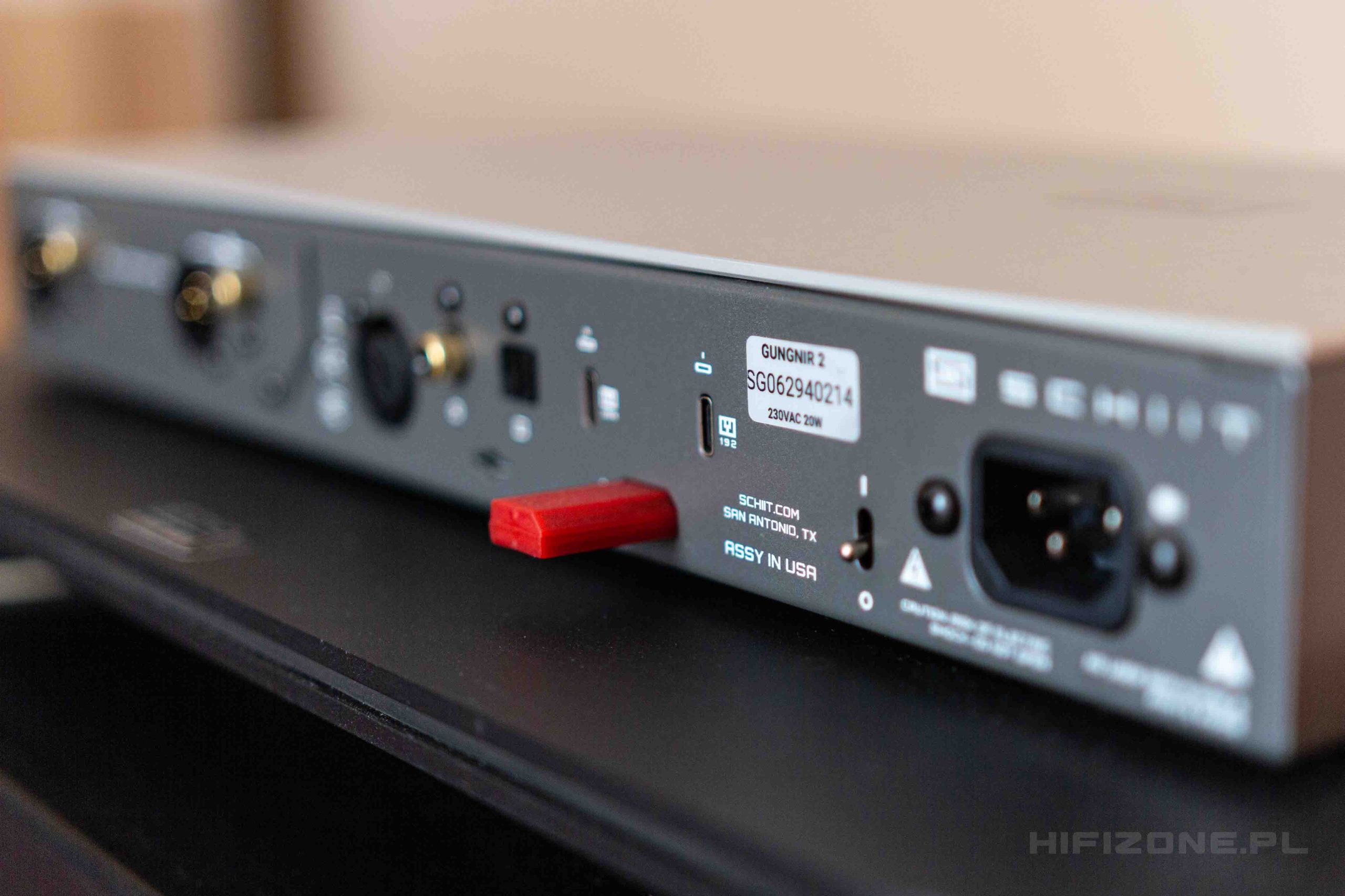
Let’s start from what we can easily see. The G2 is housed in a typical Schiit-like enclosure, meaning that it has a standard width, but its depth and height are quite short. It somehow reminds me of some old British amplifier which were very often miniscule in size because the enclosure size was adjusted to what’s actually inside. In other words, there was no audiophile air in those units, and you won’t find any inside the Gungnir 2. This is actually a clever approach, since for example in Europe real-estate prices are really soaring, so any space is of true value. One thing though that should be considered though: you can stack G2 with things like Schiit’s own Freya or Kara preamplifiers, yet if you have the typical-width component but with a higher depth, the G2 will have to go on top. I wouldn’t see that as a much of the deal (especially since my recommendation would be that you put Gungnir 2 on top because it can get warm quite a bit), but just mention this so that you know. And yes, the power switch – it’s on the back. This is typical for the most of the Schiit’s products (power amps have the power-standby switch on the front though), it just the way they make things (which actually makes sense from the design standpoint, but I can understand that this can be seen as a nuisance somehow).
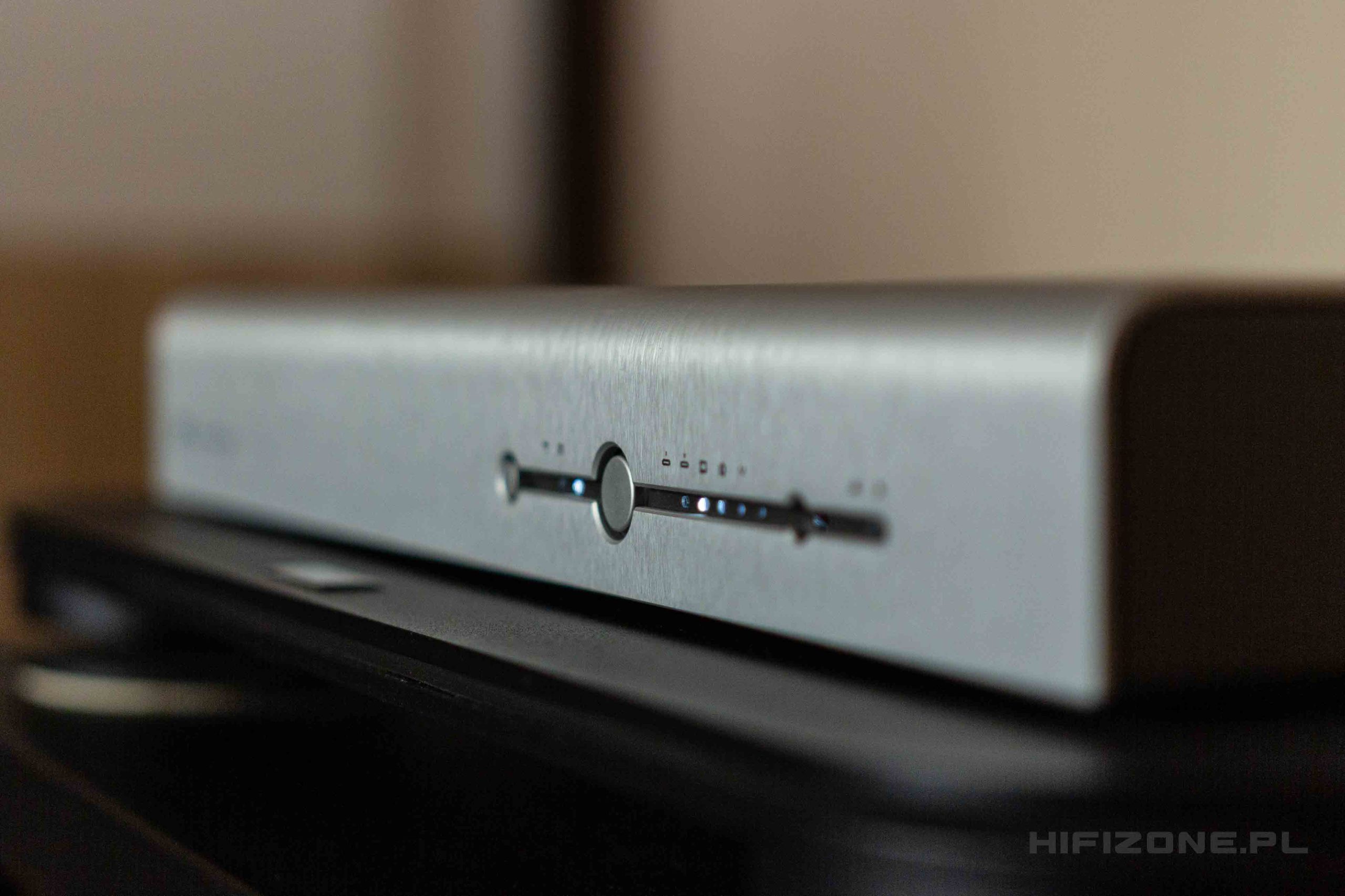
Now, a few comments regarding the front panel. It may be a bit minimalistic, but it also quite a modern and even a bit fancy looking. You will find just two buttons here and quite a few led indicators. The first, smaller button function is twofold. It allows you to invert phase (short press) or to go for a NOS mode (long press for two seconds). In that latter way of operation, it bypasses the build-in and in-house designed closed-form digital filter that is something that is unique to Schiit. Yes, it has one (not two, five or whatever-number) digital filter option. And this is something that I previously mentioned in my review of Schiit Modi Multibit 2 and needs a bit of explaining. You see, most digital converters will allow you to choose between a few digital filters that are embedded in an off-the-shelf DAC chip that is dedicated for audio. Be it an AKM or ESS solution – they all have stuff like “standard” or “minimum-phase” built-in digital filter setting or something like that as an option. There are DACs also allow NOS mode, but it’s worth mentioning that this can be tricky, since some DAC chipsets name the “NOS” as a setting that puts their internal digital filter in a mode that only mimics a no-filter approach.
While the Texan company offers only one digital filter mode it would be also fair to really underline that this is their own design, which also took quite a few years to accomplish. Even more, their closed-form digital filter solution is based on the knowledge of the digital audio most famous veterans – Mike Moffet, who was also the name behind the famous Theta Digital brand. What I am also getting at here is that one important thing that may be somehow overlooked, but – in the case of the more expensive Schiit’s DAC gear – is really worth both mentioning and emphasizing as well. Well, the thing here is that the Schiit Gungnir 2 (as well as the more expensive Yggdrasil in both Less Is More and More is Better versions and the cheaper Bifrost) doesn’t use off the shelf DAC chips. It rather – in the case of the G2 – uses an Analog Devices DAC8812C silicon that is designed for industrial (be it military or medical) applications, where the precision of operation and reliability are of paramount importance.
This is really something, since implementing such a DAC chipset in an audio application is not an easy feat and requires more than profound knowledge of both the digital and the analogue side as well. Obviously, the choice of the particular converter silicon is one thing, and the rest of the circuitry is another, but even looking through the prism of using the DAC8812C DAC chips (it actually uses four of them, in a fully balanced configuration), we will easily realize that the Gunginr 2 is something entirely different. Schiit also markets its currently second-from-the top DAC as a first with the MufltiForm architecture converter. Itss name is a bit cryptic, so I asked the Schiit Co-Founder Jason Stoddard, and got this answer:
“This is tough. Because Multiform is almost all on the analog side, but it uses the same DACs as other products we do (Yggdrasil LIM and Bifrost 2/64 use the same D/A converters, the TI DAC8812). So it’s a topological difference. I might be able to explain it, but that’s also giving away the magic. I’d prefer that other manufacturers have to at least buy the product before they reverse-engineer it. So I’m sorry, but I can’t get into details here.”