
He is usually really talkative on their designs, so this whole MultiForm must actually be something really new. To add spice to the soup, he also mentioned this:
“This is pretty much the same thing as above—we use multiplying DACs in many products, but Gungnir 2 is the only product that has the Multiform mixed-signal topology.”
Since I couldn’t get any more info on that, I asked about the analogue side of things. This is really important and we will get back to this in the sound description part of this review. But for now, let’s mention that the G2 actually uses an op-amp based signal path, which is one of the ways of doing things in the analogue domain. As Jason explains:
“Dave (our head mixed-signal systems designer) is a bit, ah, obsessed with exceeding discrete designs. He’ll hand-select op-amps and passives and tweak until they sound quite nice, as you’ve noticed. It’s a bit of a race between him and me—I’m the discrete guy, he’s the integrated guy. For Gungnir, he came up with a great combo of (insanely expensive) op-amps that work very well, and probably use a bit less power and real estate than, say, a Nexus discrete stage. But I’d say it really comes down to having a designer that cares about more than measurements and datasheet implementations—and that’s Dave.”
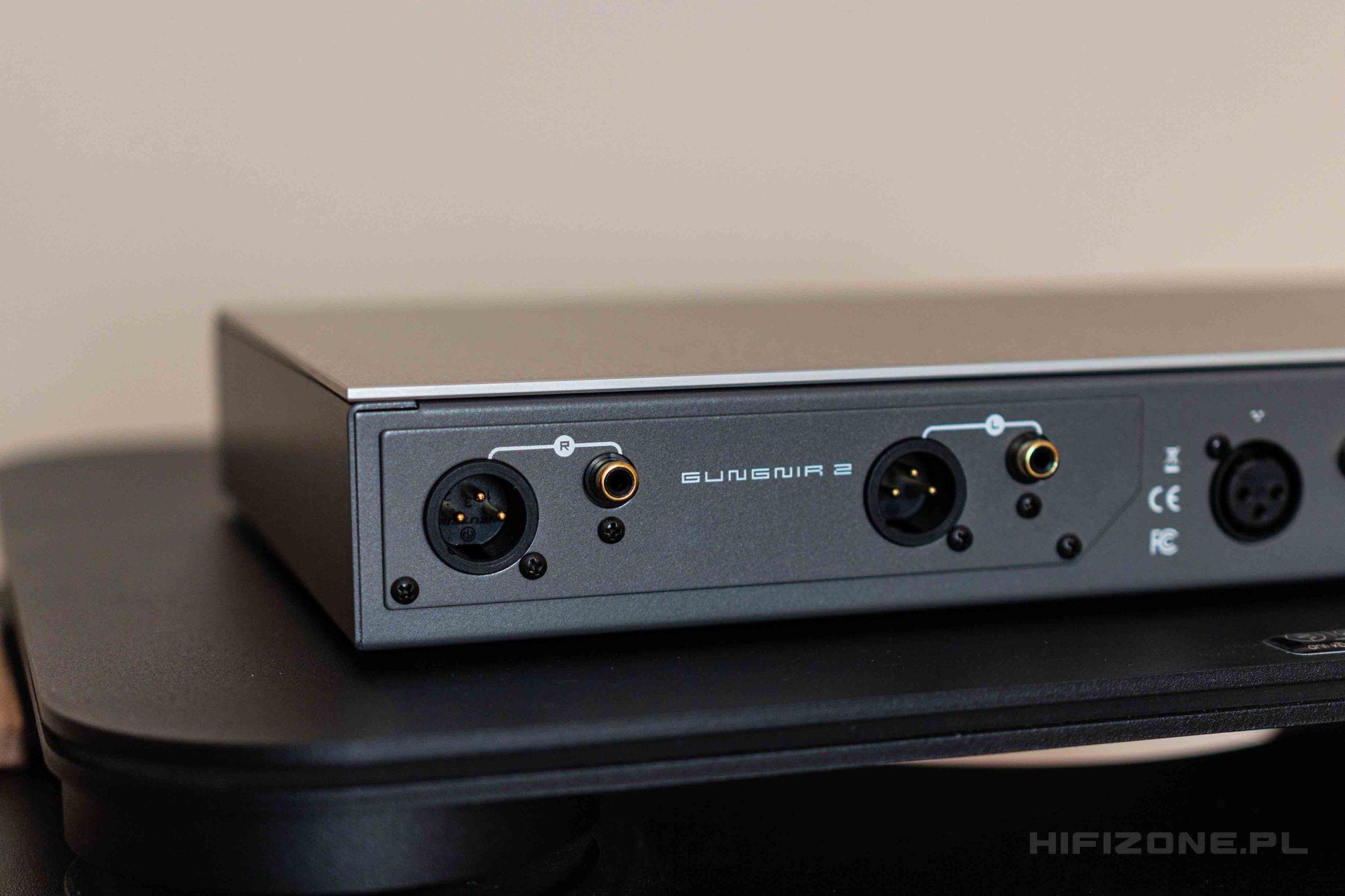
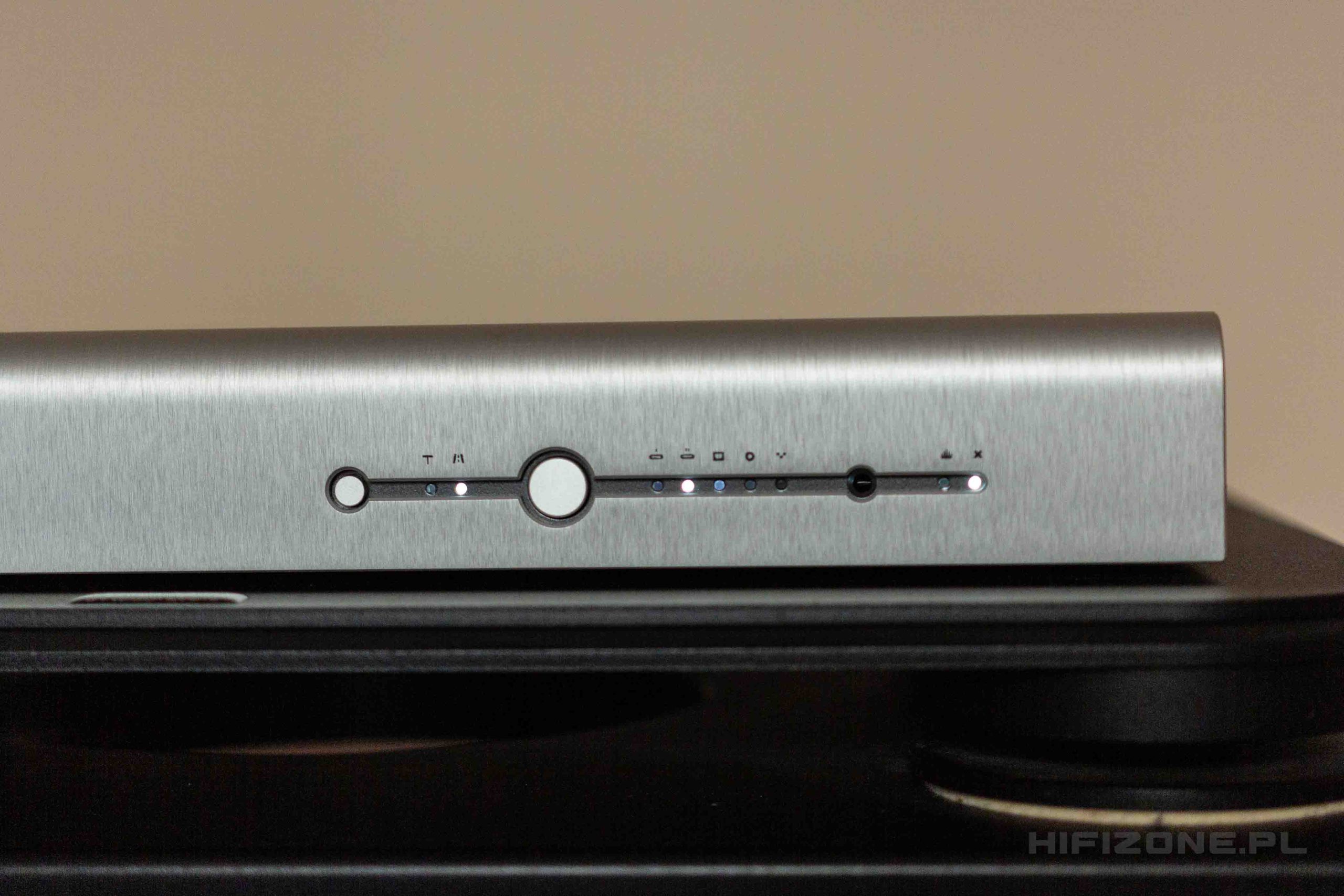
I would like to mention one thing here, as an actually important and relevant comment. Whether the DAC has an IC-based (Integrated Circuit) or op-amp based analogue side doesn’t actually mean that it will sound in this or that way. It’s all about an implementation, since there are op-amp based DACs that sound great and converters that have discrete analogue stages that are somehow subpar. And the op-amps used in the G2 are also something rather unique, since these are Analogue Devices AD4898, which are not only one channel (manufacturers usually use two or even more channel op-amps because they make the design simpler and cheaper at the same time), but also something that is not often found in such an application. This is another thing that we will get back to later on, since now I would like to move to the front panel of the Gungnir 2 and mention something different, which is unique to the Schiit digital-to-analogue converters. This is the so-called “Buy Better Gear” led indicator. When connecting a source via S/PDIF or TosLink or AES/EBU input this ma light up in some particular circumstances, as Jason explains it:
“This lights up when the microprocessor detects a particularly bad input signal. It looks at center frequency and jitter. If they exceed our preferred ranges, it’ll let you know “hey, this gear really ain’t that great—or has a problem.” In reality, it’s probably not going to come on. LG TVs work fine, for example. This is a bit of a holdover from the old days when we’d actually have to shift from a VCXO to VCO in order to accomodate a bad signal. Now, it’s all programmable oscillators, so we don’t have to switch anything. But we figured you might want to know.”
So, here we have another interesting feature here – it’s the programmable oscillators. This is another interesting design choice obviously that is also g different than what most companies. As for the power supply, we get two transformers here, one for the digital and the other one for the analogue, so we have a proper separation here. Then there’s that thing with the real, true upgradeability of Gungnir 2. By saying real, I mean that you can actually change both the input card as well as the one responsible for the conversion and the output. This is something that also has to be taken into the picture, especially in the light of the fact that Schiit is soon coming up with their Singular™ conversion technology, which will be actually a discrete-based and high-frequency delta-sigma conversion that will be offered as an alternative to their multi-bit solution:
“Singular™ is showing up on Yggdrasil first, most specifically in the most expensive, top-end Yggdrasil. We consider it a flagship technology. This makes a lot of people think that we’re “abandoning” multibit. We aren’t. Both multibit and delta-sigma will live side by side in our line and vie to be the best. That said, eventually, yes, Singular will come to Gungnir 2, and, since it’s modular, customers will have the option of upgrading to it if they want. That’s one of the advantages to modularity. You won’t have to throw the whole DAC away when technology changes.”