
The pods themselves are pretty large, yet well-made. On each of them you will find a small status diode and a touch control area. The diode(s) will inform you when the pods are charging, awaiting connection, are ready to pair, just the usual things that you can expect here. As for the touch control – it’s basically the same: you can play, pause, answer calls, hang up, skip tracks and control the volume. As far as the controls go, everything is pretty logical. So, for example, holding touch area on the right pod will turn the volume up, while holding that on the left one will turn it down. What’s also of some importance is that you can use the touch controls to reboot the pods when required.
As your everyday ergonomics may be subjective and will vary from person to person, I will only say that the pods are actually more convenient than they may seem at first. Certainly, someone at iFi actually used them and they not only just look good in the case – they are really wearable and heavy at all. The only thing is that discretion is not their strong point – they are certainly noticeable behind the ears. There are those silver areas that also highlight that we’re dealing with the “I want to be seen” kind of gear.
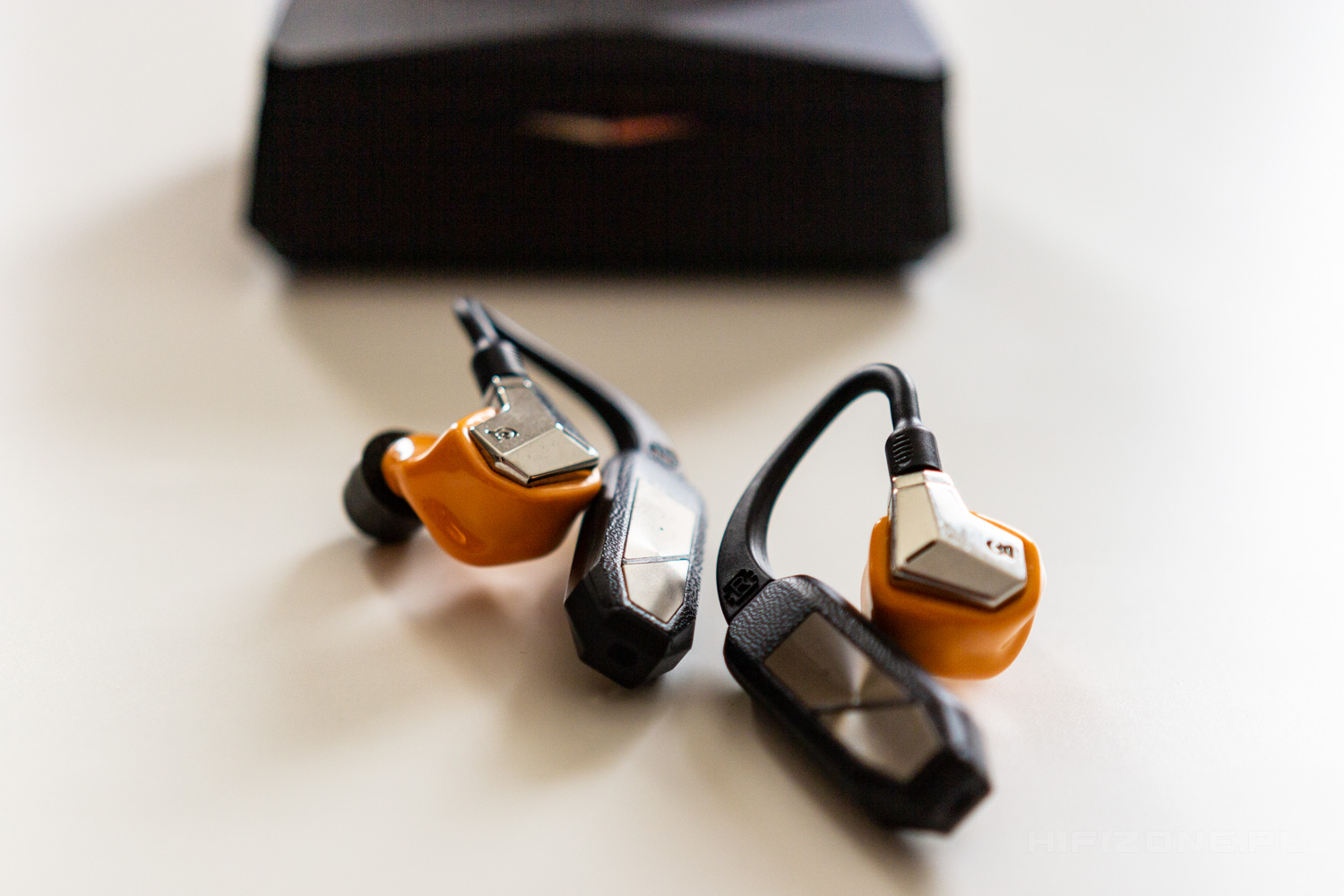
And then there’s the carrying and charging case that almost everyone (that has seen or reviewed the GO pod) comments about. Let’s start with the one thing that, yes, may seem or actually be debatable here: its size. The thing with it is the fact that while it will easily fit into a backpack or a car front storage area, it’s simply too big for it to comfortably fit it into a pocket. The size is actually more or less two times the size of a bigger TWS carrying case. But before you begin to judge the GO pod only by the prism of this one physical measure, just hold on for a second. Because when you open the case, you suddenly realize what’s the reason behind it and everything becomes obvious.
The most of the internal space is reserved for the IEMs that would be connected to the pods. And everyone that has a custom-made in-ear-monitors will surely understand, and perhaps even appreciate that design choice. Some of those IEMs, often very complex multi-driver pieces – are not small at all, they may be of the in-ear type, but often they are certainly much bigger than your usual TWS designs. And then there’s something: judging by the design, by the look of that case I strongly feel that the word “portability” was not the first design criteria here. But rather it was designed to keep your fancy, expensive (C)IEMs safe, while at the same time being able to charge the pods a few times. And then there’s that big battery with the whopping capacity of 1500 maH. We’ll get back to the charging-related things later on, since now I’d like to praise that charging case for a few things. When you open it, two LEDs suddenly lit the interior and you also realize that it’s cushioned with some kind of a tender and nice to the touch material. The whole effect is really nice and it even has some luxurious feel to it. The place in the middle of the front of the case when you grip it to open is also well designed.
So summing up, apart from the size of the carrying and charging case – there’s nothing wrong about it. And if we remove the size of that case out of the equation, or understand why it’s the way it is – I would even the praise the design for doing it all-out and making it actually stand out and stylish. The manufacturing seems solid and precise and the pods, while certainly visible – also have that modern and unique look.
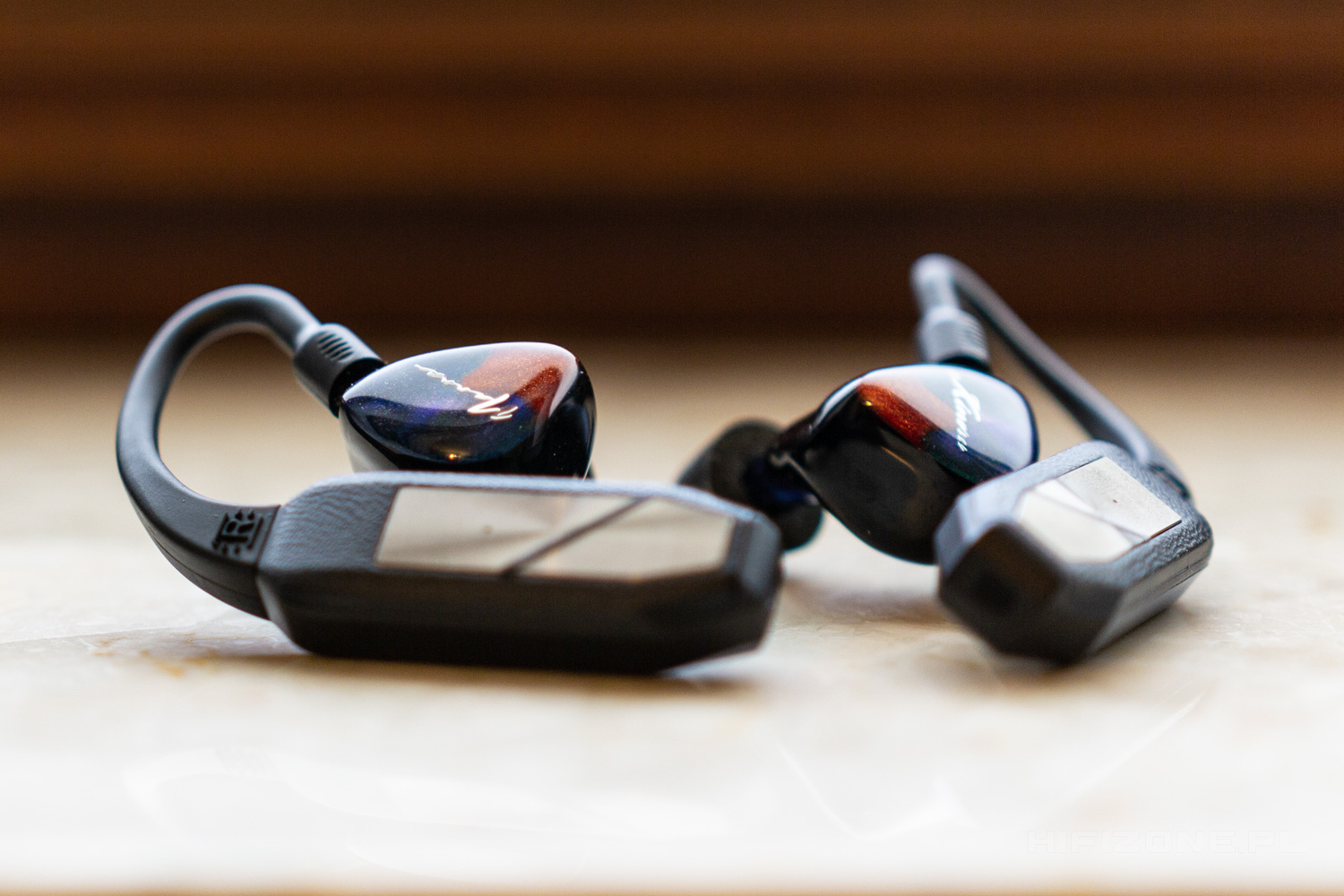
Just two more things: when you get the pods with the IEMs connected to it out of the case into your hand, you suddenly realize how elegant, clever and at the same time lightweight this solution is. And at the same time, it may happen that the lights in the opened case will fade out (yes, they don’t suddenly turn off, but fade out instead) – then you’ll that there was some serious attention put to many details.
Some technical aspects
Design and physicality aside, what’s really interesting here, lies underneath the pods housings. Since, as you might expect from iFi Audio, there’s quite a lot of clever engineering inside as well as some interesting ideas not often seen elsewhere.
Let’s start off with the fact that the GO pod is not based on a SoC solution, which means that it does not use a SoC integrated do-it-all chipset like – for example – many TWS headphones do. Instead, it sports a Cirrus Logic DACs (in each of the pods) that work together with rest of the circuitry, where each element of it has its purpose. This is how Mike from iFi Audio explained it to me in an e-mail:
“The GO pods have their own separate Bluetooth, DAC and amplification stage, allowing each individual stage to be optimised and refined without the compromises that may be found in an all-in-one design. To this end, The amplification stage of the GO pods incorporates high quality audiophile-grade components such as TDK C0G multilayer ceramic capacitors and inductors from Taiyo Yuden and Murata to deliver low equivalent series resistance and high linearity. For the listener, this results in significantly higher quality audio and significant noise reduction.”