
You may ask whether are there any caveats that go with all this downsizing? And I would answer that in this particular case (more on that later) there’s only one thing that should be considered. The GO bar has no built-in battery, so it strictly relies on the host’s power supply. Whether it’s your laptop battery, or your tablet battery, or your workstation’s USB power supply – GO bar will take its power (and also data) via the USB cable that it connects with to its host. But what I would like to emphasize here is that I wouldn’t see this as any kind of a drawback, but rather as a specific characteristic and a (more or less) conscious design choice at the same time made when devising GO bar. You see, there are a few, usually bigger, dongles (the question also arises if can they still be called dongles) that have a battery built-in and the GO bar simply isn’t one of them. iFi actually has some portable DAC/amps that have that battery inside – take a look at the GO blu for example. Which is, by the way, a bit lighter – at 26.5 grams – than the GO bar and has as much as 10 hours battery life, yet still doesn’t sport some advanced controls over the way it operates (like the GO bar does) and has a less extensive specs, which is another indication that the GO bar was conceived with a slightly different purpose here – more performance that “all-in-one” oriented.

Because the whole philosophy with the BO bar is that it will be host that provides the power and the GO bar will get both the power and data and proceed from there. And before you dismiss such approach, consider this – when using a PC as a source – whether the dongle has a battery or not, is irrelevant. When using a tablet as a power and audio data source – the impact will also be marginal. And when using a smartphone, consider this: most of the phones still require everyday charging and most of them have quite big batteries. And in that last scenario it all boils down to this: whether you want to have one battery (in the phone) or two (in the phone and in the dongle) to charge. So, it’s not like one choice is better than the other. However, consider the term “ultraportable” in this case and you should get a clearer picture.
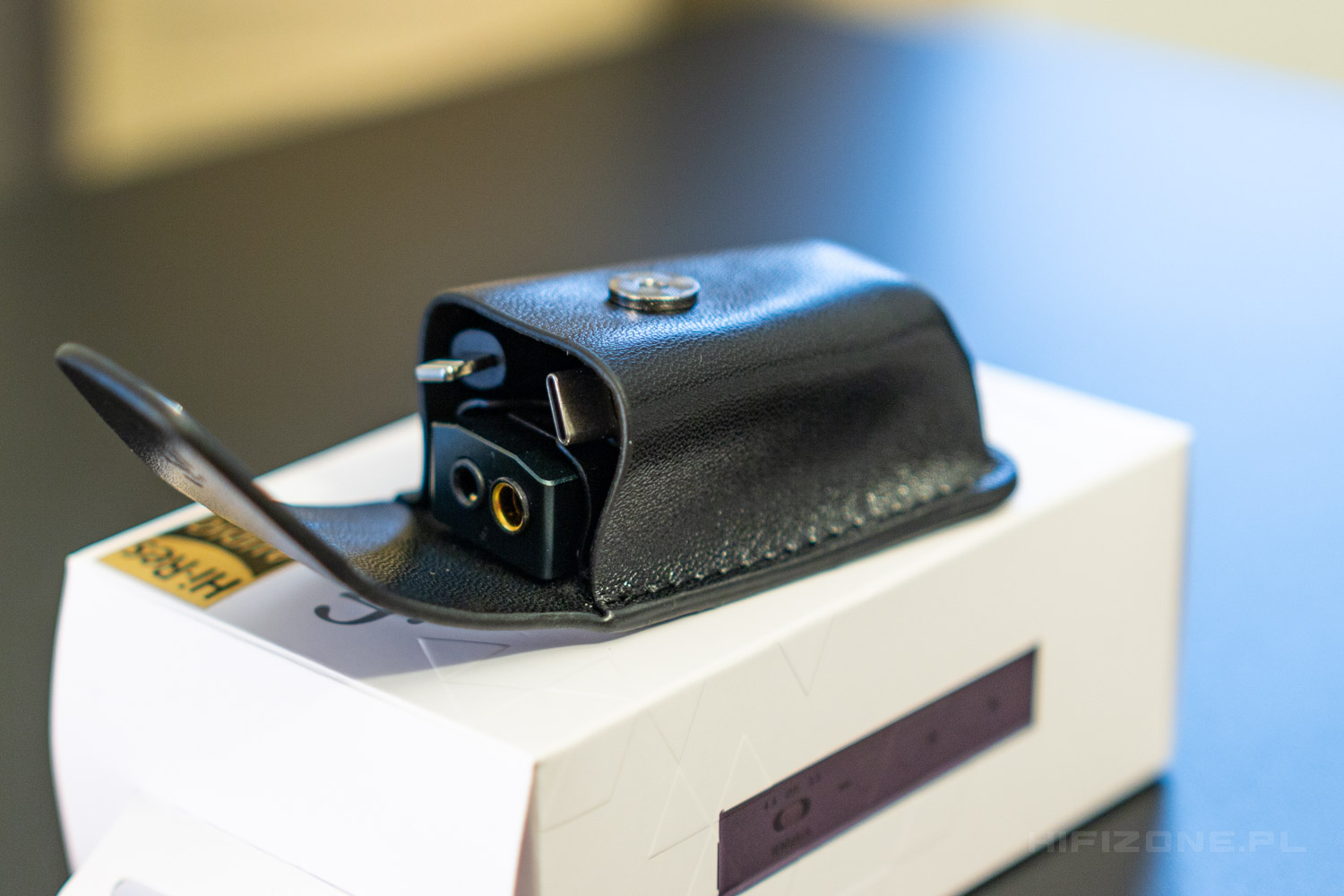
The only thing that I think needs consideration is the power requirements to get the maximum power. GO bar can pull as much as 4W of power from the host. This equals to 800 mA and is far beyond the technical specification of the USB 2.0 standards. In other words then, what you need to know is that in order to get the full power, GO bar needs to be connected to the host that complies with the USB 3.0 PowerDelivery standard. On lesser hosts it will work, but the volume will be limited.
As for the size and the actual design – its really good. The only gripe that I have is the led descriptions on the back are actually hard to read, but that’s about it.
A few intriguing technical twists
When we look closer at what’s under the aluminium hood of the GO bar – this is where things really get interesting. Let me put it this way: if somebody is looking for that dongle-form-factor USB-connected DAC with headphone amplifier that would offer the most freedom and flexibility when it comes to sound and signal processing customization: this is the bar to get. Let’s leave the generous power specs aside for a while and talk a bit about both the analogue processing modes and the digital filter options that the GO bar has to offer here.