
The first thing that can be noticed is the general ease and openness of presentation as well as the amount of breath that it provides for the music. It’s not sounding in-your-face yet everything is clear. What is also interesting is that it provides a lot of perspective. It’s not distanced nor blurred in any way, yet if I had to use an analogy from the world of speakers, I would say that instead of moving the performers into the room, it provides a wide-open window of what’s going on into the soundstage that is not too upfront and not to recessed. You get that comfortable position not to be in the first row, but rather in the second, where you just get a bit more perspective on how the things happen. What is at the same time interesting is that while the sound has that perspective it’s also engrossing and very wide.
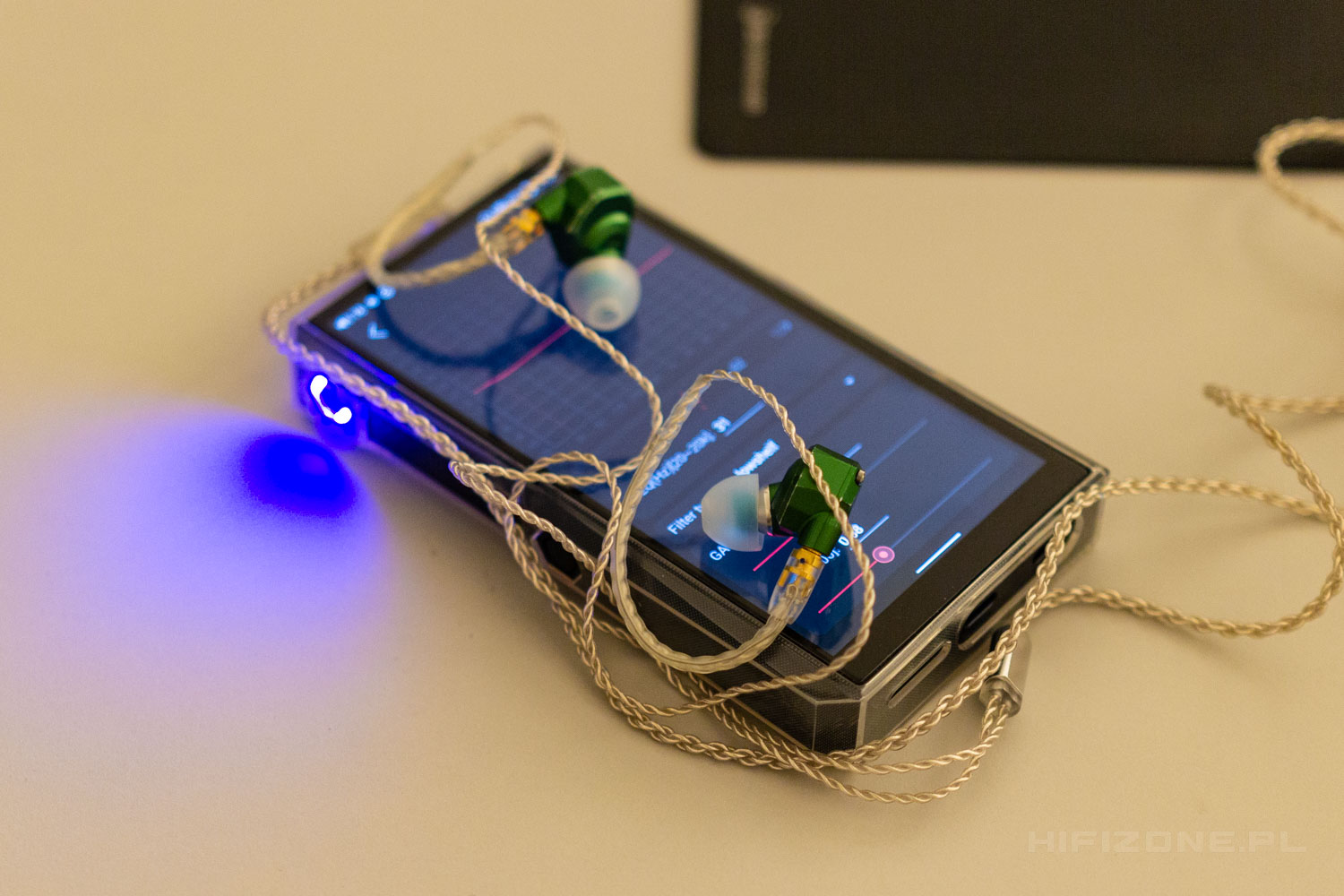
Also in the sense that in envelopes the listener with both wide soundstage and a whole aura with lots of micro-details. I started my listening sessions from a live recording of an electronic band “forgotten future” and their track “Energy Assembly (Live)”. This is a slowly yet steadily developing track and the FiiO encompassed me with the music that was fluid and full of atmosphere and sparkling details. But most importantly, I had a profound feeling that I was listening to the music and not to the player. This is actually quite interesting, since the M23 offers not that common combination of being open yet not in-your-face nor stringent sounding. It also adds to its usual, innate fluidity that element of sparkle, which was pretty obvious when connected to HEDDphone TWO (more on that later).
On the “M4, Part I” tracks by Faunts FiiO’s player proved that it’s also really capable player when it comes to creating the atmospheric, layered soundscapes. It really drawn me into the music here and while maybe I will repeat myself – on this track there was also that feeling that there’s only music, without that electronic haze that you can sometimes (possibly too often) associate with digital sources that are just trying too hard. On the whole M4 album there was that notion that the M23 is just happy to play music, without trying to prove anything or to provide an insane amount of details that would be just too detached from the whole spectacle. Yet what’s interesting is that at the climax of the above-mentioned “M4, Part I” there was a lot of going on, there was also a lot of information conveyed which was just inherently woven into the entire fabric of that track. If I could use another analogy – then it would be that it somehow reminds me of the sound of a pretty good record player in that regard.
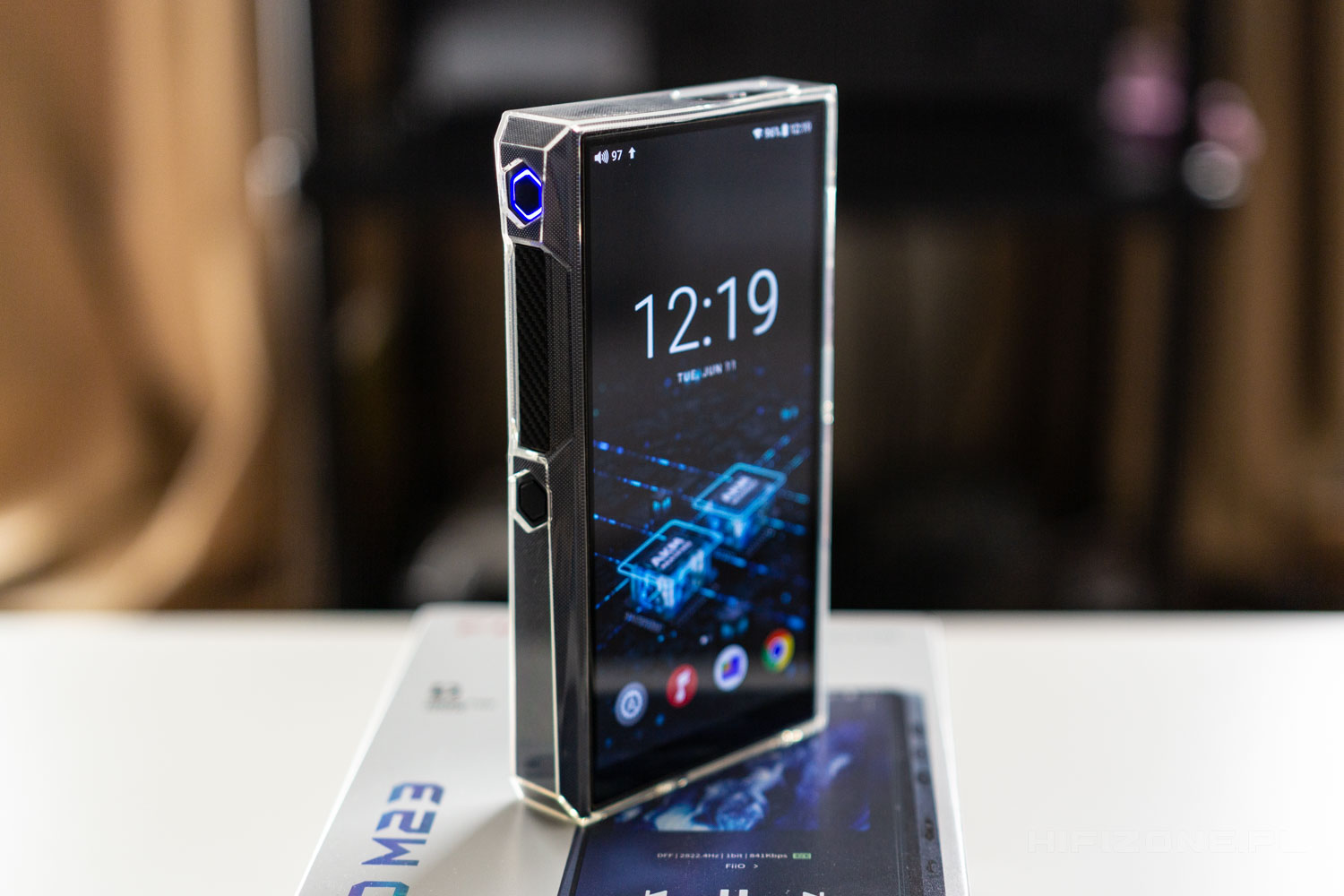
What I mean by that is that everything just flows, it has no problems with a fast-paced music nor sudden changes of the timbre. Yet it does not overexpose changes in the macro-domain, it gives them space and air. This is also interesting, because even if we consider that the DAC of choice is one thing, and its implementation is another and possibly even more important to the end result factor – there’s still something about that AKMs (not so) new DAC chipset. Everyone who owned a TDA1541-based CD-player back in the day will know what I mean here. It’s not only about the timbre or the relaxed delivery but actually more about the fact that while you do feel that it has its own character, it also in no way diminishes how you get to like it more and more as the new tracks and the whole are being player.