
What the M23 shares with the M11 Plus is the THX amplifier, yet in the reviewed player we have a quad-amplifier instead of dual as was used in the M11 Plus. This translates to better performance, especially in regards to the higher output power, which – when used in the Super High Gain Mode that is enabled when using the dedicated USB-C power-only input – will be at 1000mW@32 Ohms per channel. This is how the manufacturer describes the amplifier section:
For users who know THX AAA, probably know its unique signal amplification and error correction technology, coupled with harsh op-amp peripheral selection, compared to ordinary amplifier circuits with strong audio performance and output efficiency, lower noise, lower distortion; M23’s THX AAA 78 + earphone using op-amp parallel architecture, compared to the M11’s amplifier, has a lower output impedance, higher thermal efficiency and more load capacity, its output power is greater compared to the M11’s amplifier, heat dissipation efficiency and greater bandwidth capacity, and its output power is greater compared to that of the M11.
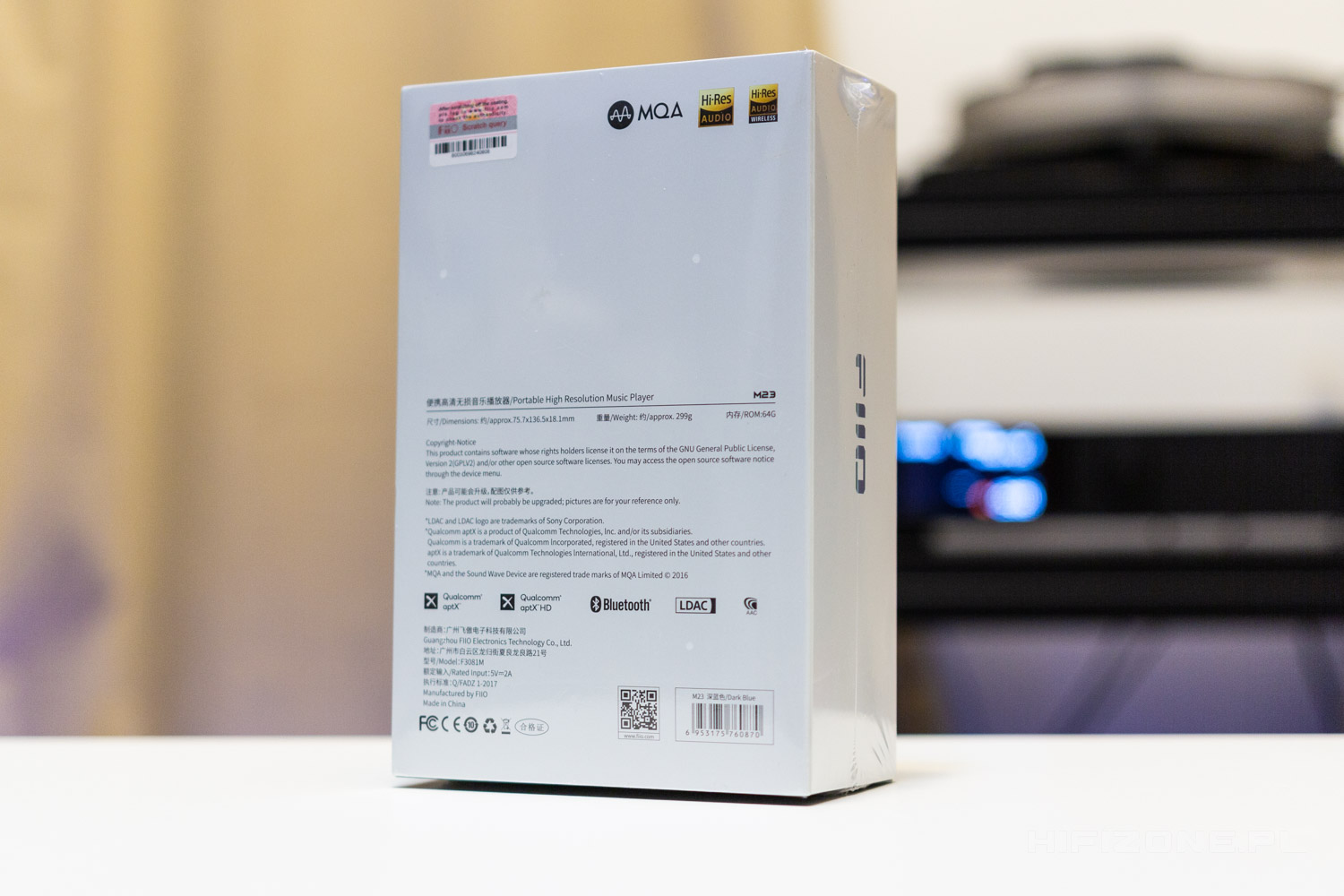
Just to clarify here – the output power is higher than both the M11 and the M11 Plus, so in general the new M23 should be able to power all, but the most demanding headphones with ease while still having low enough noise floor to be able to drive also the most sensitive IEMs on lower gain levels.
Then we have quite elaborate power supply section that is independent for both digital and analogue parts of the player:
M23 internal 4-stage power supply stability architecture, as well as up to 20-way branch power supply network, for high-quality digital audio and analogue audio provides a solid foundation and power; digital and analogue power supply independently, effectively reducing crosstalk between digital and analogue circuits, digital more accurate, analogue is more pure, drive more abundant; M23 uses 28 polymer tantalum capacitors for each power supply smoothing, polymer tantalum capacitors stable characteristics, lower equivalent series resistance (ESR) noise, so that the power supply ripple is smaller, the power transient response is better, the sound is more surging.
What should be noted here is the use of tantalum capacitors which are usually a sign of great care given to power supply design and are often a trait of a well-sounding sources. It’s also interesting how FiiO emphasizes all those details in regards to both power supply and the analogue chain part’s choice. Because in the latter they state that they use the Panasonic film capacitors together with the OPA1612 (I/V and LPF stage) and the OPA1662 (voltage amplification stage) op-amps. Not to mention the high precision film resistors and the metal cover that acts as a shield for the entire analogue part. I emphasize that because what’s of note is the thoroughness with which FiiO approaches the design. And left no stone unturned taking care of all the most important electronic design intricacies on both the analogue and digital side. And while we’re at the digital, let’s not forget that we have dual low-jitter crystal oscillators for the both 44.1 and 48 KHz sampling frequencies and their multiplies that are a part of the FiiO’s “DAPS” system that is their audio-focused audio core meant to be bit-perfect and avoid resampling.
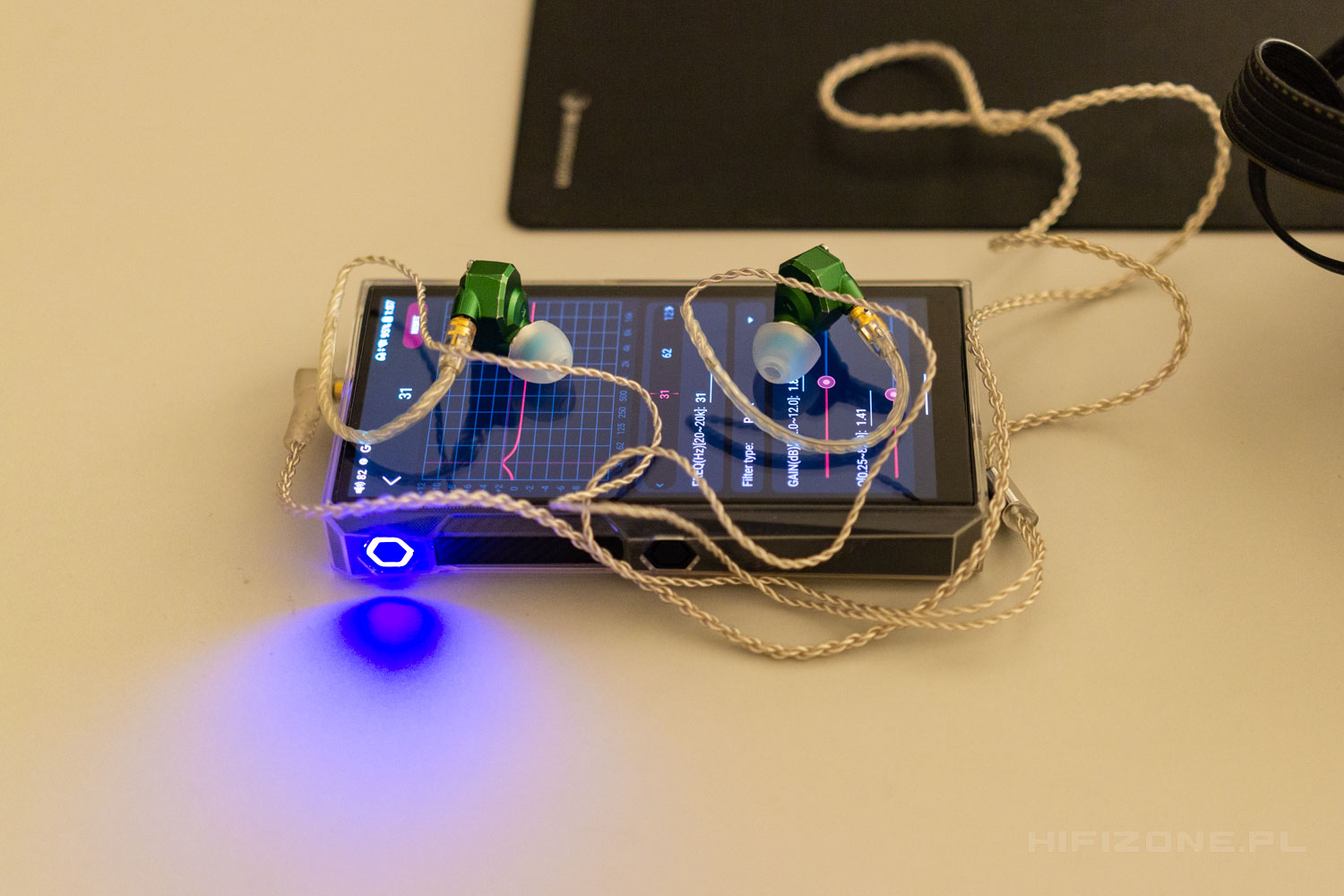
As for the whole operating-system related things, the M23 is obviously running Android, but- as I stated above, you get a custom version of with a modified core here. Moreover, you also get as many as six operating modes, which are actually easy to switch between from the menu. And, at the same time, are something that strongly differentiates the M23 from older players like the first generation (AKM-based) M11 when it comes to functionality. This is how the manufacturer describes them:
The different working modes of M23 are designed based on different usage scenarios, and the six working modes can cover most of the scenarios of users. Android Mode: As the main mode, users can freely use third-party APPs and enjoy all major streaming applications. Pure Music Mode: This mode is the main interface of FlyOn Music, which allows users to focus on listening and enjoying the music without the interference of third-party apps. ROON Ready mode: Exclusive for ROON players. Bluetooth reception mode: It can be used as a Bluetooth earphone to listen to music from mobile phones and other devices. AirPlay reception: iOS device players gospel, can solve the pain point of Bluetooth only support AAC encoding, improve sound quality. USB DAC mode: support connecting to computer/mobile phone (Android/iOS) as an external sound card, get more sound experience.