
EarMen Tradutto – the sound
As you might have noticed, I’ve written a few words earlier about misconceptions and prejudices. And how people sometimes build some pre-projected images in their heads that connect a certain-chip-based DAC with a particular sound signature. It’s not a coincidence that I am maybe repeating myself here a bit, because when you start listening to the Tradutto – you will soon realize that it simply belongs to a different bunch of digital-to-analogue converters than the symbol of its main translating chip might suggest. In other words: it’s a member of those privileged party, where you actually stop thinking about the technicalities and numbers and start listening to the music. Because here – all the generalized characteristics correlate no more.
Just shortly after connecting the Tradutto to my main speaker system I noticed a few interesting and at the same time quite important things. First, there’s no digital glare present, the sound isn’t edgy or etched in any way. It’s natural by the virtue that it’s clean. The second intriguing observation that will strike especially those expecting any kind of that ESS-like sound is the fact that midrange here is actually quite saturated. Its natural too, by the virtue that it not only verges on being on the rich side, but it’s also surprisingly fluid. And in this case, it’s not done here by the simple trick of injecting higher number of 2-nd (and other even) harmonics, but rather – by the absence of any glassy imprint on the sound while precisely conveying also the subtle changes in textures. Also, the clean nature of EarMen’s DAC can be described as innate, it’s always there and should not be by mistaken with any hint of sterility.
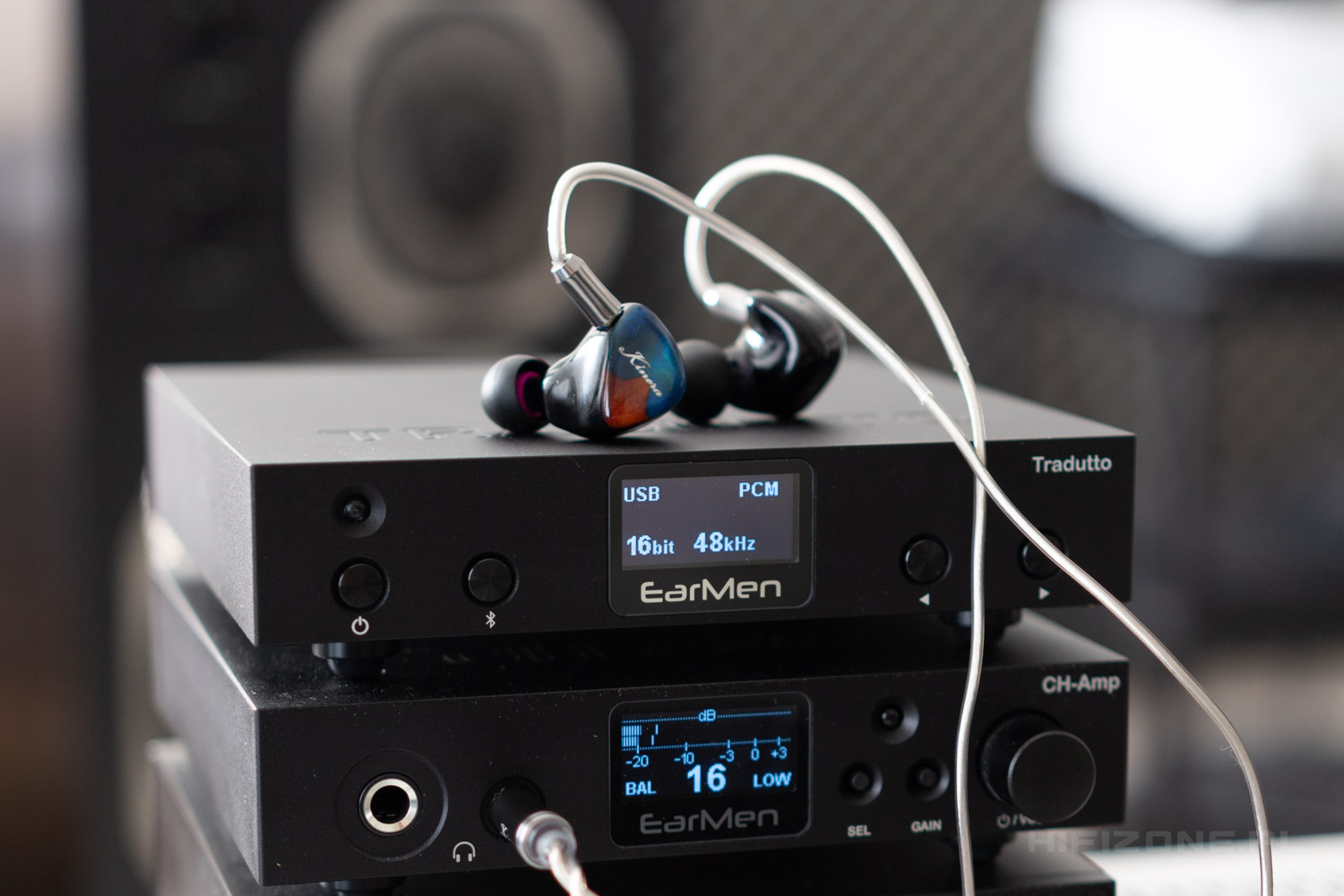
So, here we have that clean sound together with the tonality that tends towards the fuller, richer side. Then, there’s that third trait, where you can actually hear the virtues of – you’ve guessed it – the ESS’s Hyperstream modulator. It’s the general resolution married with uncluttered, layered presentation. I would colloquially call it, for lack of a better word, “unglued”. While it doesn’t have that laser like precision of a much more expensive (in the absolute scale) DACs like Chord TT2 or Sonnet Morpheus, it might surprise many in this regard. Also, because it has that sought-after ability to make you simply listen to music instead of looking for any shortcomings in the sound.
And when it comes to space rendition, the soundstage is rather on the expansive side and the first layers are very slightly moved towards the listener and very palpable. That was obvious when listening to Malia’s and Boris Blank “Convergence” album. Tracks like “Celestial Echo” and “Raising Venus” in particular. What can also be heard on that album is that the definition is there as well as a dynamic expression. It’s just not married to any kind of glare or edginess. These two factors are actually – in the case of Tradutto – absent to the level that I rarely find in devices at this price category. It speaks volumes about the Tradutto’s DAC chip implementation and electronic design in general.
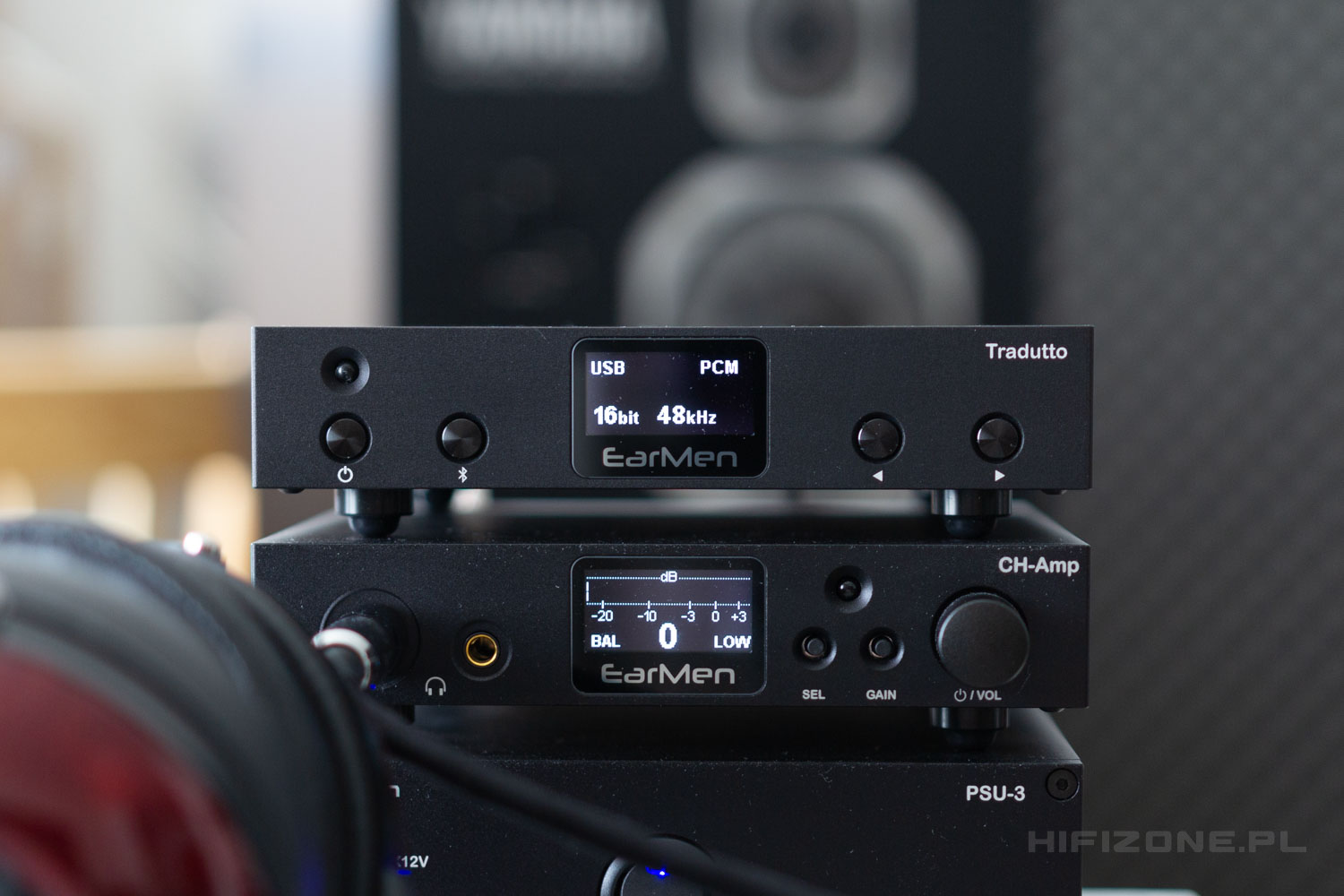
On Dire Straits “Money for Nothing (Remastered 1999)” song (which was surprisingly reminded to me by the newest Ben Affleck’s “Air” movie) the Tradutto confirmed that it can punch above its weight and offer both gusto and enthusiasm, while still sounding composed and transparent. It’s also worth noting that on this, and a few other even more congested tracks it became apparent that this is definitely the DAC for those who prefer to listen to the music rather than dissect every possible recording in every way imaginable. What I mean by that is – and this may actually be surprising for many – that this DAC has the midrange and fulness to its sound that by most would be more possibly associated with the hallmarks of a good Multi-bit DAC, than SDM (Sigma-Delta Modulation) one. Listening further to the “Air” soundtrack – I couldn’t help myself but play “Sirius” by Alan Parsons Project. And again, Tradutto transmitted a lot of energy, and more importantly, communicated emotions. Which made me come to a certain conclusion, which was only assured after connecting it to a single-ended amplification chain.