
There are two more things more that I would like to address before we embark to the most interesting part. The first one is the supported equipment weight range of the platforms. The GUM is made in two versions, up to 45 Kg and up to 85 Kg while the GUM Evolution is made in one version actually which supports equipment up to 50 Kg. The other thing that I would like to mention, which may also be of interest is the fact that these platforms also provide electrostatic and magnetic shielding. While this shielding works only on a one plane (it does not encompass the device from every side, just from the bottom), this is also something worthy of note. Especially in a situation, where we have some gear that have non-shielded power transformers.
This is where I’d like to refer to what I wrote earlier. Which would be that such platforms not only provide an isolation from an outside word, but also provide an isolation of a certain equipment in such a way that it will also not interfere with other elements of an audio system. As a side-note here I would like to especially emphasize one thing. You see, one would normally assume that such anti-vibration platforms may be of use especially for turntables, where there ale very miniscule forces that need to be translated to an electrical signal with delicacy and precision. And that there such an isolation from the outside world would be of biggest advantage. That obviously would be truth. But the other thing that is the often but not usually seen culprit are the power transformers in audio equipment. And transformers in general.

Because, from the strictly technical standpoint (and without delving into this too much, since that would quite possibly be a subject for another more technical article) they would both resonate and be susceptible to resonances from outside, which would actually be detrimental effect (especially in output transformers in power amplifiers). Even more, also the capacitors in audio equipment are also prone to resonances. Even some companies (like for example, Arcam) use special small rubber mats on those capacitors to reduce their vibrations. As I said, this is generally a much broader subject and we will get back to this in a more technical, detailed article in the future. Because when we look at this from a strictly engineering point of view, everything in audio vibrates. Which may be, of course, obvious for the speakers, but they are actually not the only component that has this characteristic. Therefore, using such accessories like the ones that are a subject of this review makes total sense. And, finally, it’s all based in the physics of the real world and not just some made-up theories. Anyway, the proof is in the listening, so now let’s get to it.
Tewo Audio GUM and GUM Evolution – listening tests
Let me start off here with saying that I would in the first place describe what one could gain from those two platforms in general. And then move on to describe the actual sonic differences between them. The other thing that I would like to address just in the beginning is that while the actual impact of such anti-vibration platforms on any system would also depend on some of such system traits, what is also noteworthy is that there are certain things that we can definitely use as quite important common denominators when it comes to the sound. Because there are some things that would change in practically every system after isolating its components from outside vibrations (and isolating the components between them, as I mentioned earlier). The other really, and possibly also quite surprising aspect, would be the overall impact on the sonic signature of any component that has the Tewo Audio platform beneath it. Because, you see, one would usually expect that one, or two more or less isolated aspects of sonic reproduction would change here. Yet instead, what you actually get is a changed character of the entire component here. Because it’s not that the bass is better, or the soundstage is better, but rather the whole sonic presentation is elevated altogether.
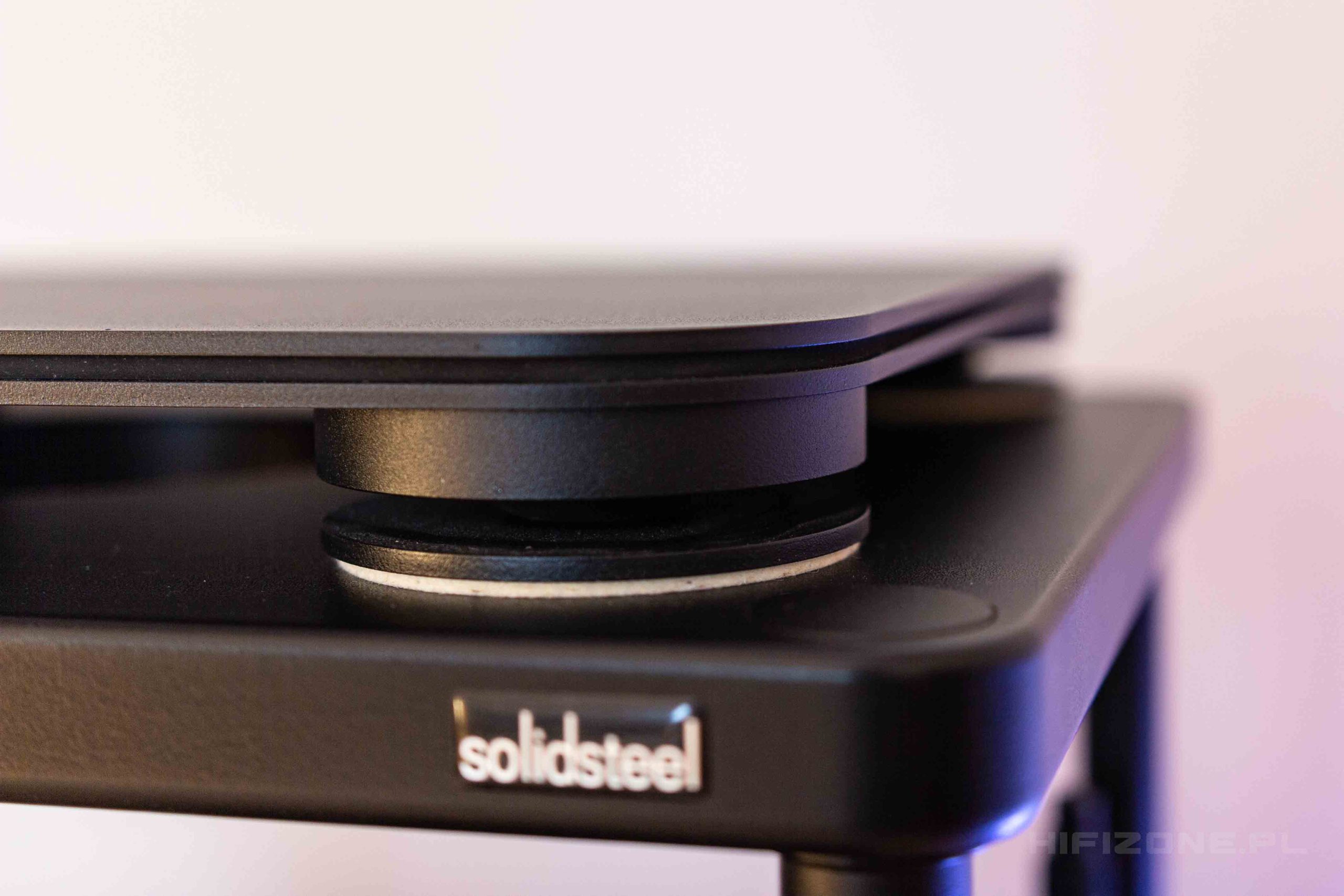
As a side-note: the changes that the Tewo Audio platforms made somehow remind me of a one very interesting situation when I was testing a pre-production version of an advanced power conditioner for one of my friends. Because what surprised me the most back then was that the sound was actually transformed as a whole. It was more like the actual chip in the DAC was exchanged for a better version rather than the output stage had some minor tweaks in it. The changes were more innate and more in the basic planes of reproduction many would think to be possible by putting such a component into a system, yet they happened. The same situation is with what the Tewo Audio brings us to the table here. It’s more about the general quality as a whole rather than changing that one particular aspect of the sound.
I used both analogue and digital sources for evaluating the GUM and the GUM Evolution impact on the sound. And I used each of those platforms alone and in the combination with the second GUM one. Moreover, I placed them both under my turntables as well as under the amplifiers and digital front-end components. And while the sonic differences were always there, I would like to mention that it’s quite possible that in some cases they would be more obvious than in the others. Looking at this from the other angle: while most components would benefit from the Polish company’s offerings, there will be some certain type of audio gear that would benefit the most. Therefore, I would put my general thoughts on this in the summary.