
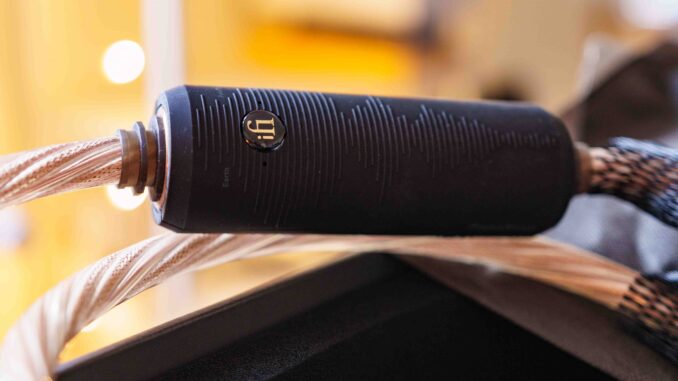
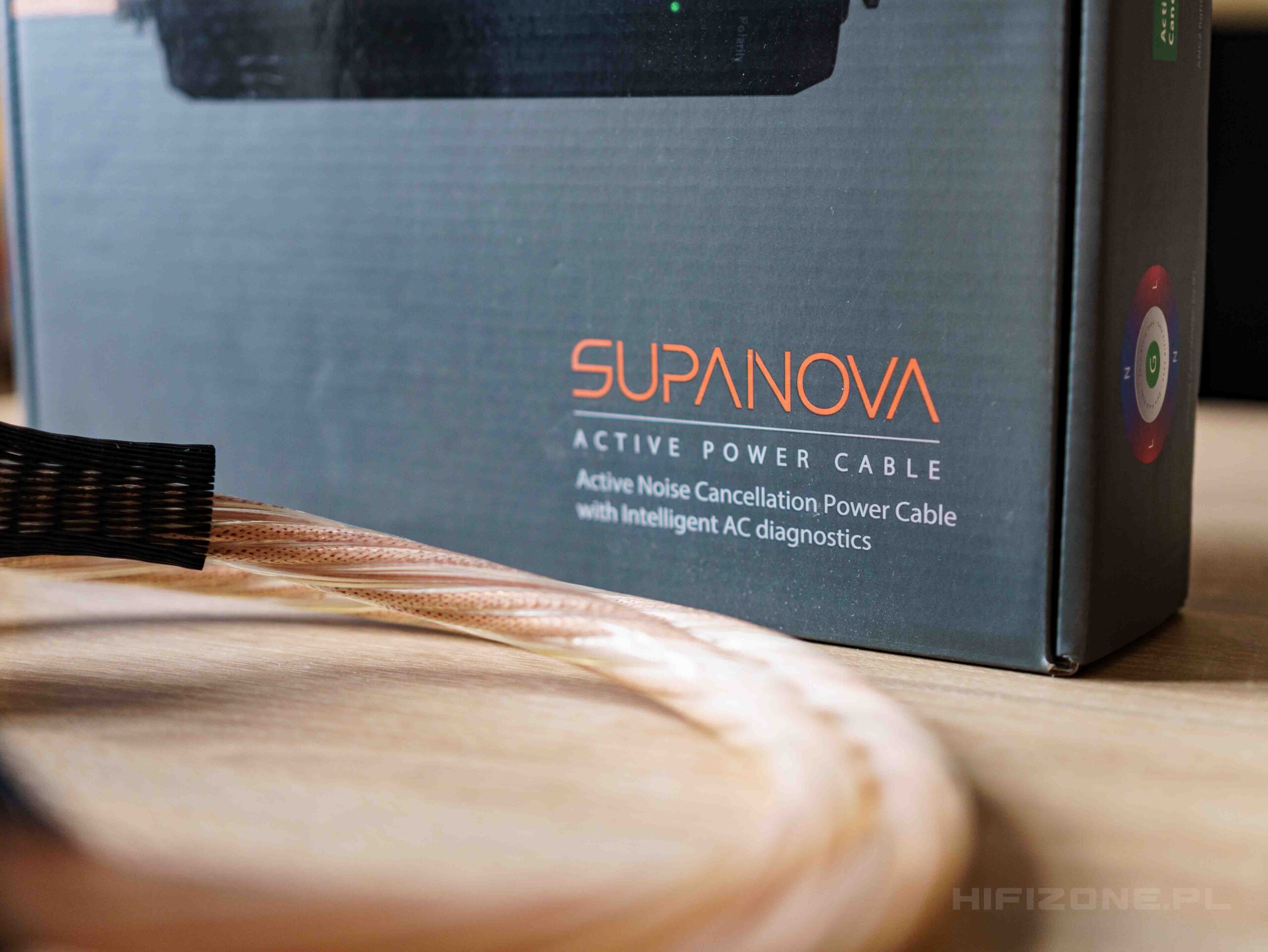
SilentPower SupaNova ia a dedicated IEC power cable that sports unique technologies which SilentPower’s parent company, iFi Audio, has been using in many interesting products throughout the years. Moreover, what is especially interesting regarding this one particular power cord (and what it also has in common with the more expensive SupaQuasar version) it the fact that this is indeed an active design. This is very important to mention this right off the bat, since we’re not dealing here with a mere “conductor with plugs and insulation” type of design.
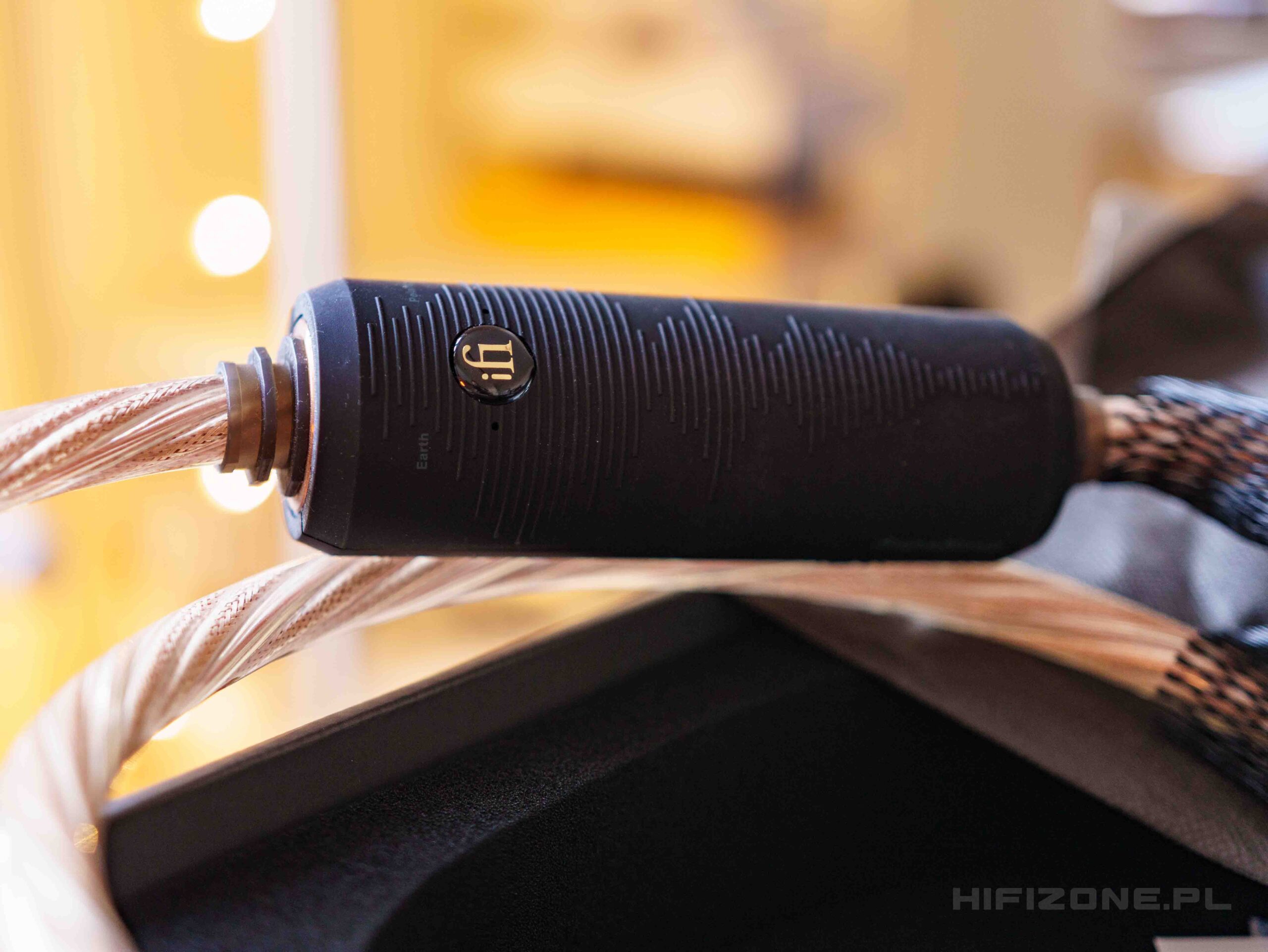
This is actually a cable that has its own, specially conceived active circuitry that is inside that oval black box which is placed in-line with the actual big round conductor. It even has two LEDs that will inform the user regarding the proper polarity and the earth connection status. That will be really handy in all those well-thought-out systems where attention to detail really matters. And both polarity and earth connection are of utmost importance is such configurations.
What I would also like to mention is a few other things, not only the company behind the SupaNova itself, but also their approach to designing all those specialist accessories. As some of my readers may have already noticed, there is a review of their USB iPurifier Pro here on Hifizone. That particular small piece of equipment turned out to be not only objectively working as advertised (by that I mean getting rid of all those noises that may actually be transmitted through both the ground plane and other lines in USB connection), but it also actually improved the audio quality itself. And it actually did so not by shallow margin at any rate, which was somehow even astounding.
Another thing that really needs our attention here is the fact that all those products from SilentPower also seem to be both realistically priced and go way beyond being a fancy boxes (or fancy cables) that might as well be just another re-iteration of something that has already been on this planet for decades. In other words, SilentPower seems to focus on the actual innate workings of those things rather that providing the mere audiophile bling itself. This is also why we decided to try the SupaNova and tell you our sincere thoughts on the subject.
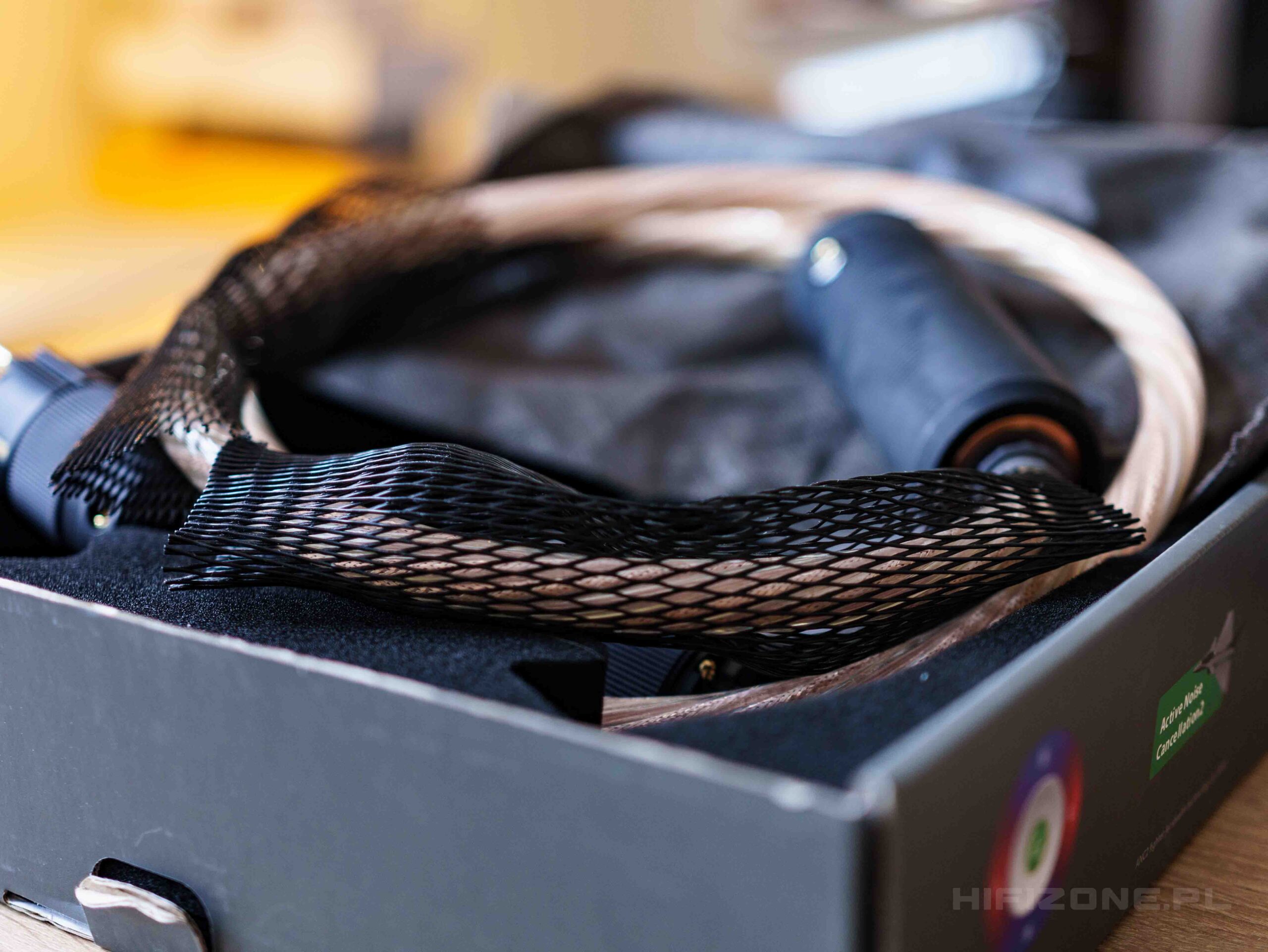
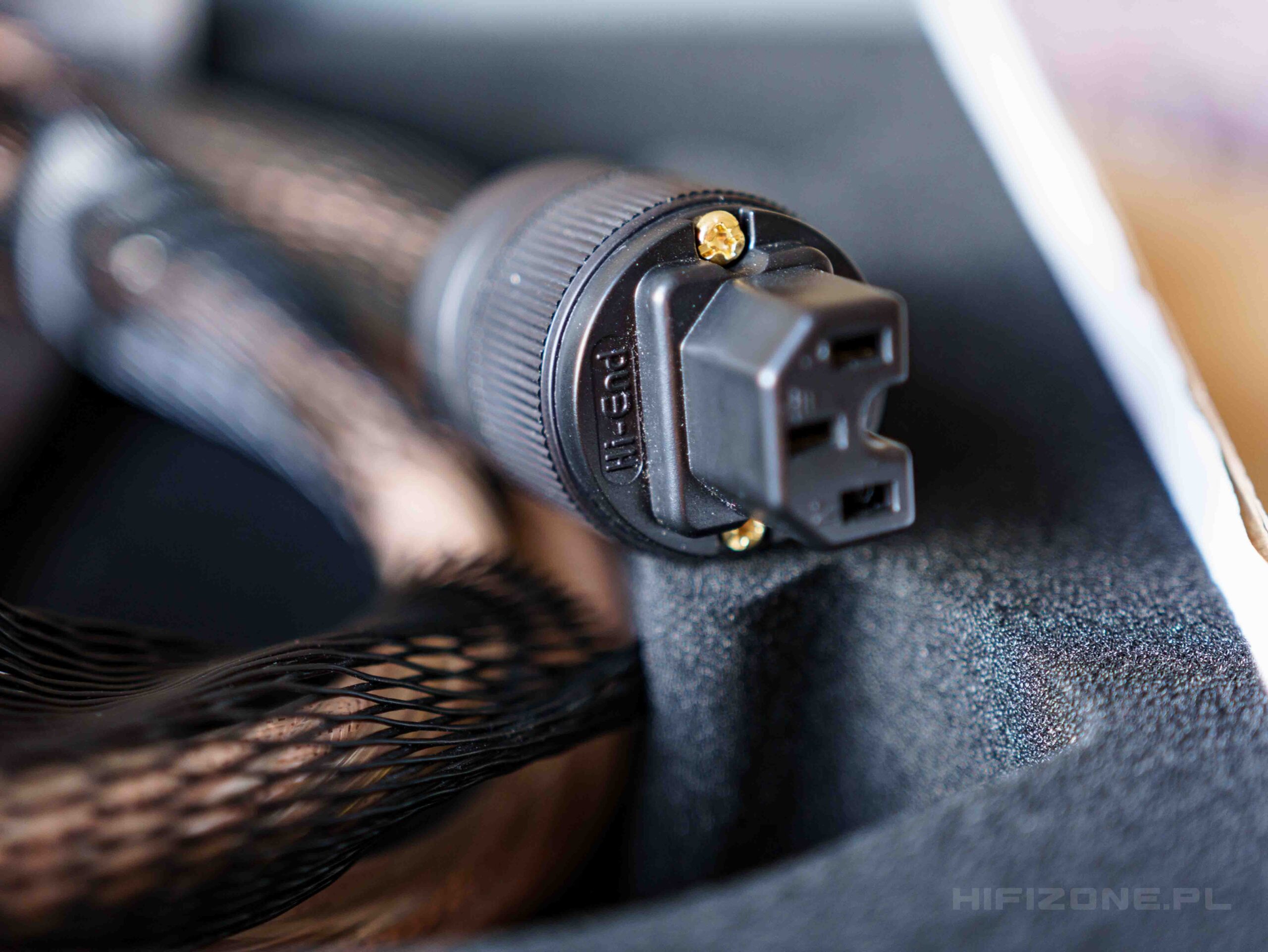
But before we get to some of the interesting technical details, let’s look at what we really get for those three hundred Euros (I assume that the price in the CONUS will be similar, yet in those green papers). Well, we get a power cable that can have four mains plug versions (US, EU, UK, AU). Maximum operating rating is 10A at 250Vac and 15A at 125Vac. Length is specified at 1.8 meters and the weight is surprisingly hefty at around 700 grams (the box that I mentioned contributes to it, more on that later). Looking at the specifications on the SilentPower’s website it’s hard not to see the “Noise reduction” and the “Surge protection” specs that will be not applicable to most power cables on the market. The first one is rated at above 40 dB and the other 10,000A @ 775V. So basically, what we get here is a power cable with noise reduction system and surge protection as well. Or perhaps in other words, what we have here is a power cable with some real-world quantitative parameters.
SilentPower SupaNova – design
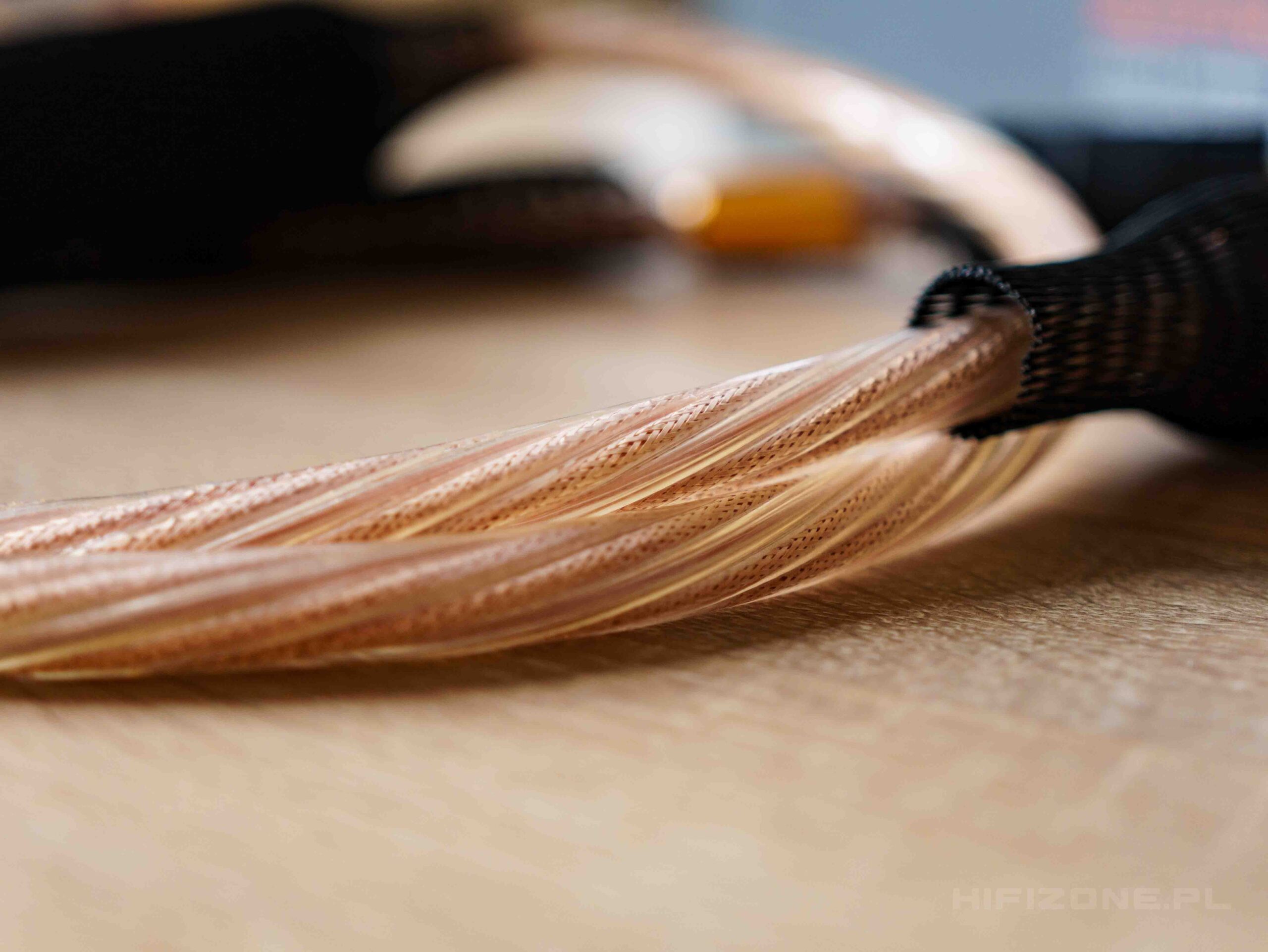
Let’s take a closer look at how this power cable is made and what the design choices behind it actually mean when applied in the context of the whole audio system. First off, the whole design seems from the start to be something that is quite hi-tech and may be actually working the way it’s designed. There’s just something about this cable that means business. The cable itself is thick yet not as stiff as one might initially think.
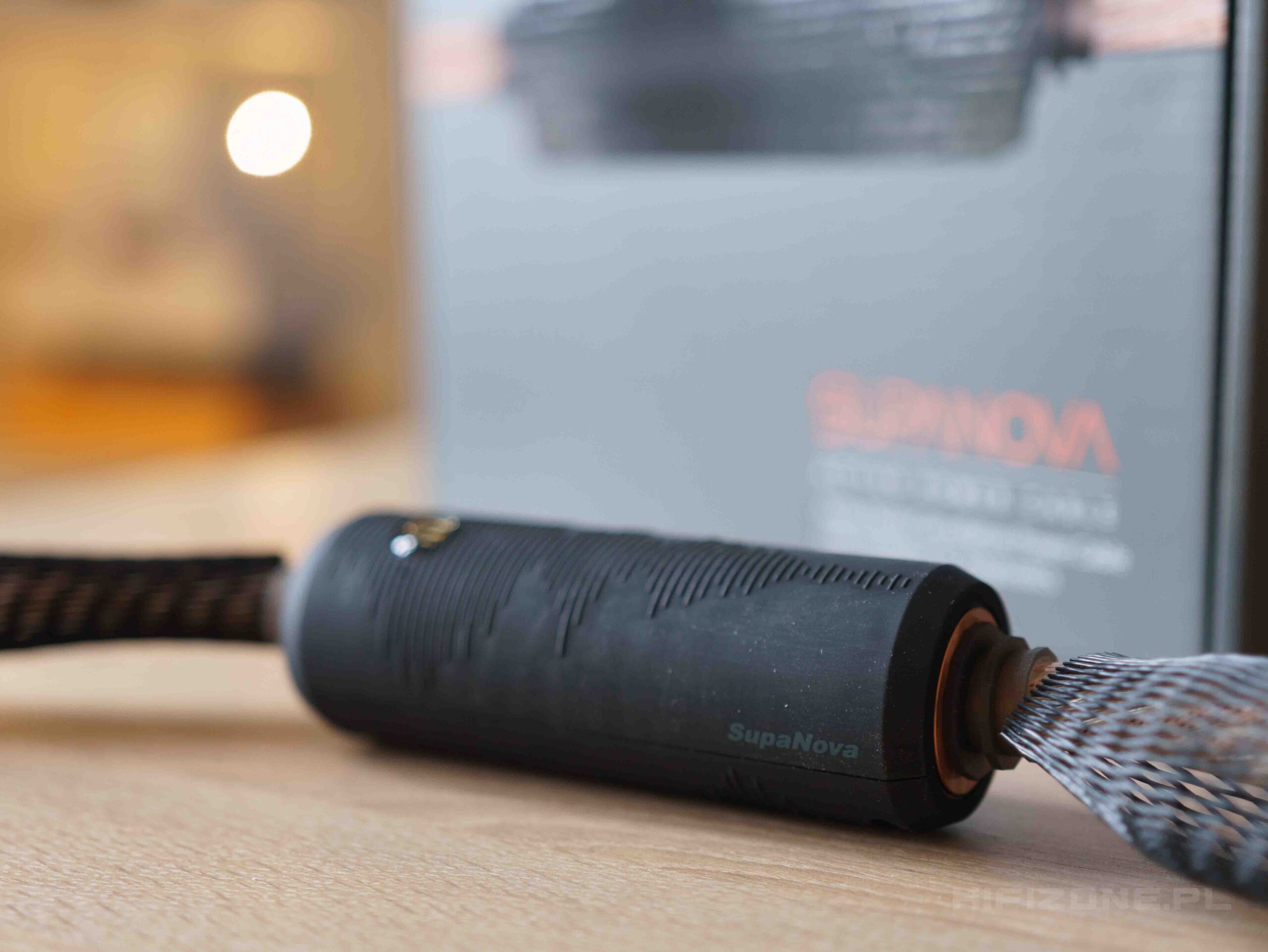
However, one good piece of advice here: please notice that the entire box housing all the filters surge protection electronics is located closer to the side that connects to your equipment. This means that the effective weight of the SupaNova that actually acts on the socket can be quite significant. And in some particular cases (especially considering here weakly mounted IEC sockets or really light equipment) cable routing should be really taken into consideration. But I also mention this to be actually more on the safe side, since in my case, when using with really different gear I didn’t experience any practical problems.
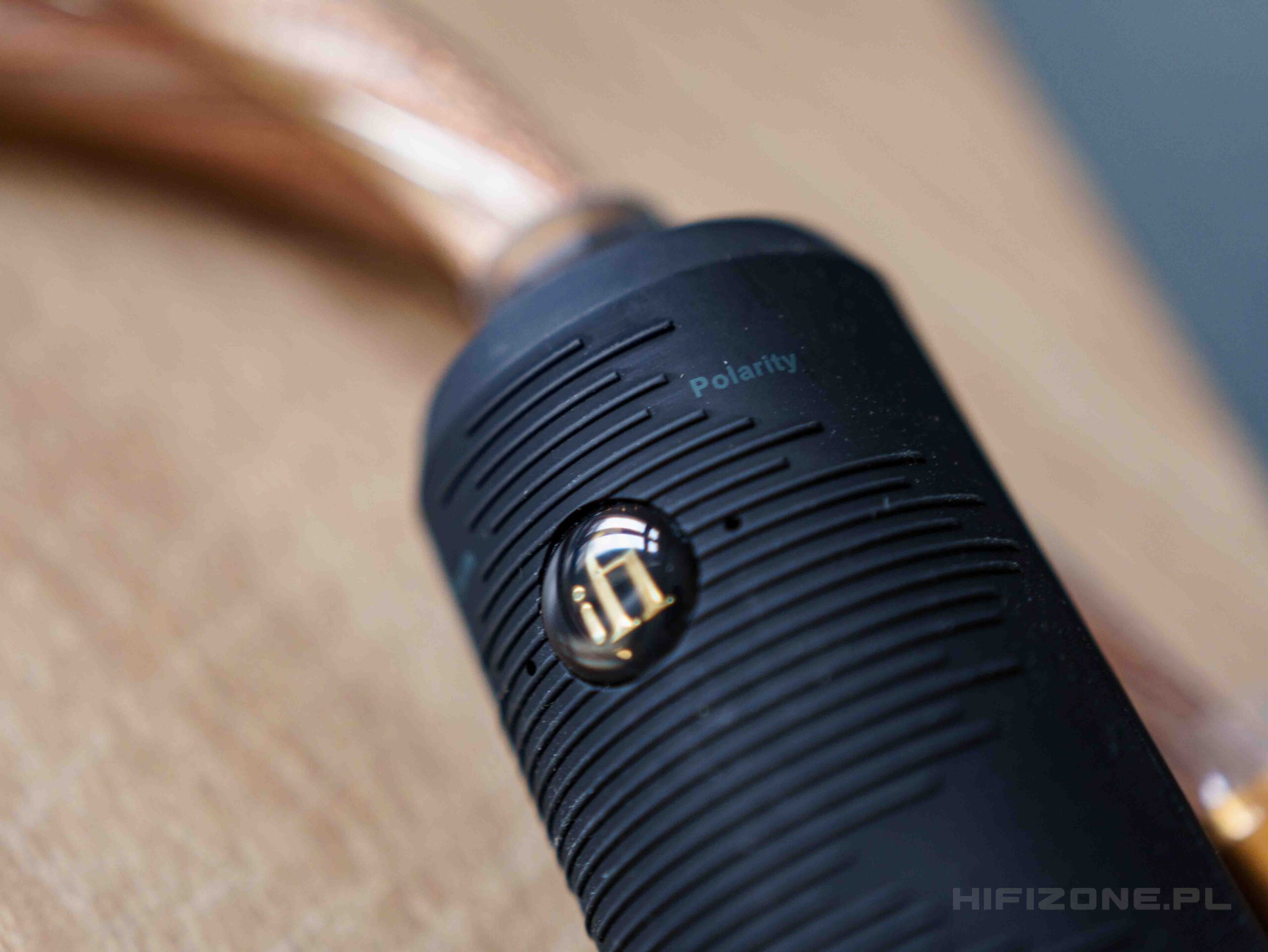
The other thing that should be noted is that you may want some kind of access to the oval box that is placed in-line on the cable so that you are actually able to see the two LEDs that are located there (at least when connecting the cable). Those are important part of the package and you will want both of them to be glowing green. Since when the polarity LED lights up in red that will indicate that, obviously, your polarity is wrong. That may mean that you will need to turn your IEC plug by 180 degrees or investigate whether the wiring in your installation is correct. Which sometimes isn’t. And the SupaNova may be the very good and also easy way of indicating that.
On the other hand, the earth connection diode, when glowing red, may be a sign of even more serious problem(s). If both LEDs are off then that means that the cable is in the cut-out mode. The way this whole system in that in-line box operates actually tells us one very important thing. We should actually see the SupaNova as something more than a mere cable. But rather as an integrated solution that has two key elements: one being the cable itself and the other is the whole electronic gadgetry that offers all that additional and at the same time important functionality. I would actually perceive that particular SilentPower’s contraption as a power cable with both noise filter and protection built-in.
As for the actual filtering, let’s quote the company’s website:
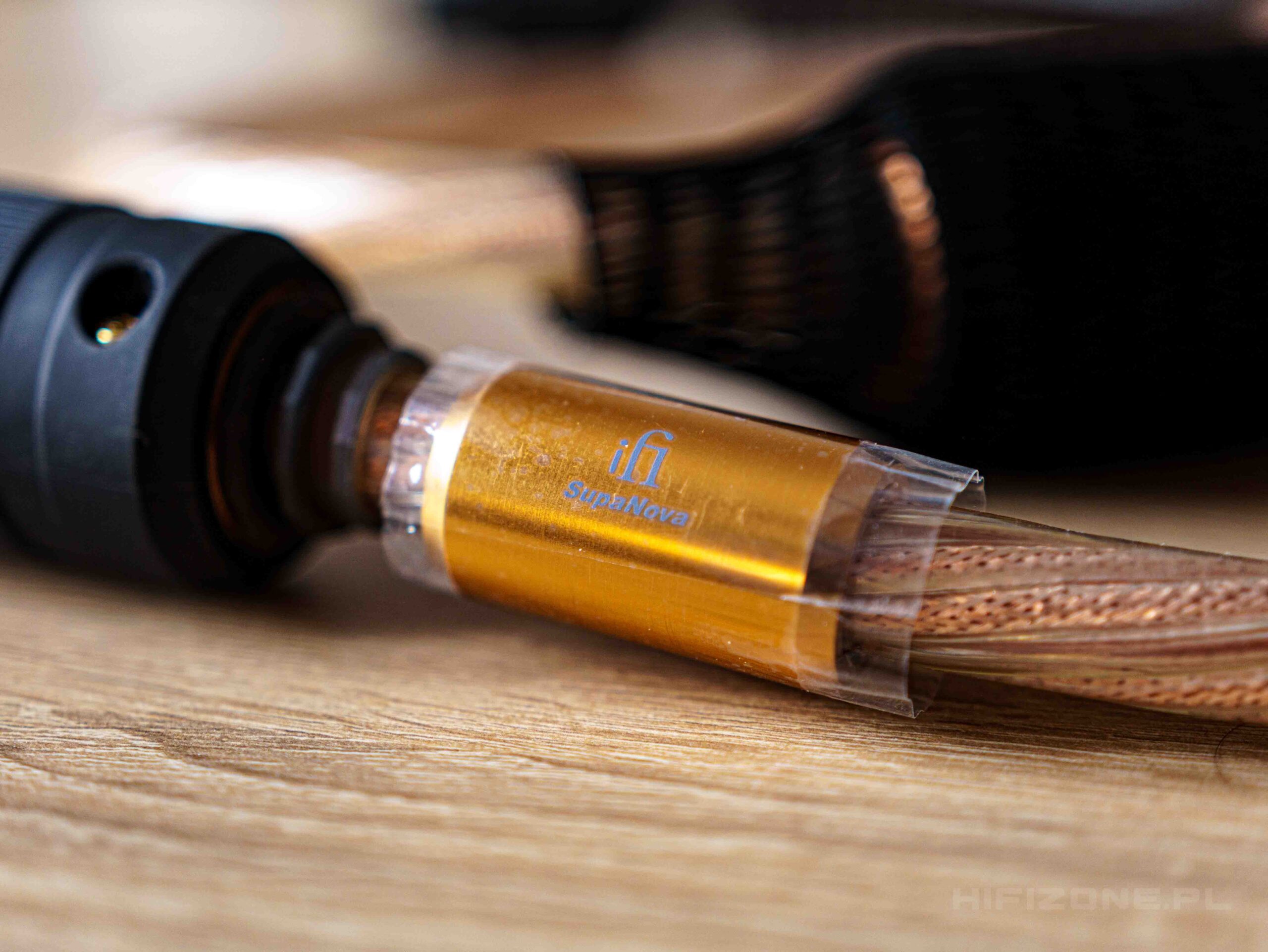
“The SupaNova takes the Nova and adds a cylindrical housing partway down its length. This contains our proprietary Active Noise Cancellation II technology. ANC II actively eliminates far more noise across the frequency range than a passive product, even across the lower frequencies. We use inverse noise current to cancel out the noise in the mains signal. The way this works is comparable to the technology in noise-cancelling headphones.”
iFi Audio, a SilentPower’s parent company has actually been using the whole Active Noise Cancellation concept some time ago in their other products with usually good results. Electronic circuitry aside, it should also be mentioned that SupaNova has a special geometry and a shielding. The former means that the “iFi audio’s unique „Ground Zero” design technology, the cable creates a central core that is free of any magnetic fields.”
The latter, on the other hand, prevents the cable from picking up EMI and RFI, which are respectively Electro-Magnetic Interference and Radio-Frequency Interference. This means that the cable is shielded in addition to having the active circuitry. Summing up, quite an interesting design that also tells us that there’s been some serious amount of thinking and reasoning put behind it.
One more thing: please notice that there’s a bigger and more expensive “active” cable in the SilentPower’s line-up: the SupaQuasar. It’s twice as heavy and also almost costs twice. I mention this now, since I will also get back to this in the final summary.
iFi Audio SupaNova – how does it sound?
Let me state something first here. I don’t usually review cables, yet – as I mentioned previously, I am making a clear exception in this particular case because of the reasons stated above. And for the sake of clarity, let me also explain the method used for the review of SupaNova here. I was using the SupaNova cable mostly with my digital sources (in that case it was much more expensive than the cable itself DAC, which was the really good Schiit Gungnir 2 DAC that was used both with its closed-form digital filter turned on and with the NOS mode as well. I also used the Signalyst HQPlayer, which should be noted) but I also used this cable with some headphone amplifiers (mostly the very good EarMen Tradutto that I reviewed here) and also with other “bigger” equipment like power amplifiers (with interesting results actually, more on that later).
What I will present here will be somehow of a common denominator of what could be expected. I mention this especially because when it comes to cables, it’s really important to keep things as clear as possible when explaining how they could it impact any possible audio system. What I would also like to notice here is that in this particular case the sonics were quite similar to having some king of a power conditioner connected to a certain piece of gear. Let me first start off with the things that are most noticeable right from the beginning.
There are two major differences and two minor ones. Yet all of those made the whole presentation sound more mature and more musical at the same time. The first of the two important factors that were better both with the Gungnir 2 DAC and with the EarMen CH-AMP (with the PSU-3) was less granulation in sound. The other one was the darker background. These virtues are usually associated with the better power supply quality (and that actually means that there is less noise that reaches the mains inlet in a certain audio equipment) and can be quite common thing when using good power cables and, especially, some kind of power conditioning.
That was quite obvious when listening to very well recorded Boris Blank and Malia “Convergence” album. On both “Celestial Echo” and “Raising Venus” the SupaNova connected to quite resolving Schiit’s DAC provided quite a startling change actually. Even more, on quite well-known Adele’s “21” album, and especially on “Rolling in the Deep” the difference was even more obvious. Let me explain a little bit here. Initially, I listened with the SupaNova connected, then I used for the sake of comparison other power cords, one generic one and the other made by one of those better-known brands in the industry.
And here it was not that one was better or worse, since it was pretty clear that changing cables changed the sound. But the main difference actually was, as I was expecting: between the SupaNova and the generic cable that was actually supplied with the Gungnir 2 converter. This really warrants another explanation, since this one was really interesting one. Initially, after connecting the ordinary power cord, it actually seemed to sound a bit more, well, analogue. But that was the first impression that was, well, misleading. Because when switching back to the SupaNova cord the whole style of presentation and soundstage changed. Interesting was the fact that it was actually more laid-back (or call it relaxed) yet also more composed and focused at the same time.
I would say that while my attitude towards such experiments was rather sceptic, this one very swiftly changed my mind. SupaNova was clearly doing something better, yet by that “something” it could be precisely substituted phrases such as “more depth” and “more definition”. And it also provided less of that artificially up-front sound that may be interesting at first yet would be boring and tiring in the longer run. What’s even more important here, the SilentPower’s offering seemed to be rather repertoire-agnostic and didn’t prefer any particular type of music. On both Taylor Swift’s “Delicate” track as well as on Depeche Mode’s “Higher Love” it just provided better sound, period. And what I would like to mention and put into focus again was that what it offered was a more of the longer-run type of sonic presentation. Since the sound was more grain-free, thus definitely less fatiguing and simply more natural.
SilentPower SupaNova – conclusion (and a few quite interesting rematks)
Let me start off by putting everything in both wider context and some perspective. I fully understand that the whole topic of power cables (and cables in general) may or rather will stir some pots. There’s quite a lot of controversy regarding cables and, especially, power cables as such. Yet what I would like to mention in this summary is the fact that SilentPower SupaNova should actually not be viewed as a mere power cord only. Because it’s actually an active design with apparently well-implemented filtration.
Therefore, it should more be considered as a quite clever way of having a good power cable together with mains noise cleaning solution that will actually work. This is also where things start to get really interesting. My firm opinion is that when it comes to those big power amplifiers, they will be really better off directly connected to your wall outlet or power strip (obviously please take note that your mileage may and possibly will vary here). However, when it comes to those circuitries that has high-frequency signals in it that might be impeded with (usually of equally high frequency) mains noise, the solution is simple. To clean that noise.
And this is what SupaNova actually provides. It’s a perfect and actually pretty clever solution for all those who need clean power delivered to that one (or maybe even more) crucial piece of equipment without investing in those elaborate and expensive power conditioners. The fact that this cable is priced more or less at the same price of many similar (completely passive) cables and still offers active power filtration warrants recommendation alone.
Adam Kiryszewski
Manufacturer: SilentPower https://www.silentpower.tech/
Price: 499 Euro (or 499 USD)