
Before we come to the imminent conclusion, let me get back to the whole power-and-volume-and-sensitivity related side of things. And especially the Rekkrs bass presentation in the context of how do we sometimes perceive certain objective sonic aspects through the prism of our subjective perceptions of physical properties of a certain gear. Sure, if you directly compare it to Gjallarhorn or any other bigger amp – there will be differences. It’s just pure Physics. Yet the first notes of “Inhaler” from the “New Stereophonic Sound Spectacular” by Hooverphonic sounded just real. You could actually hear what was going on here in the lower registers. And on “A Familiar Taste” (soundtrack from the Social Network movie) the dynamic elasticity of the Rekkr was, within its power limits of course, also more that baffling. The thing here is that it’s not about that absolute volume levels, but rather what’s going on within those limits of the amp power envelope. And as I mentioned above, the importance of the lower end of those limits (without discarding the rest that’s above it) and how does the amp behave at the middle of the power scale is what actually really matters here.
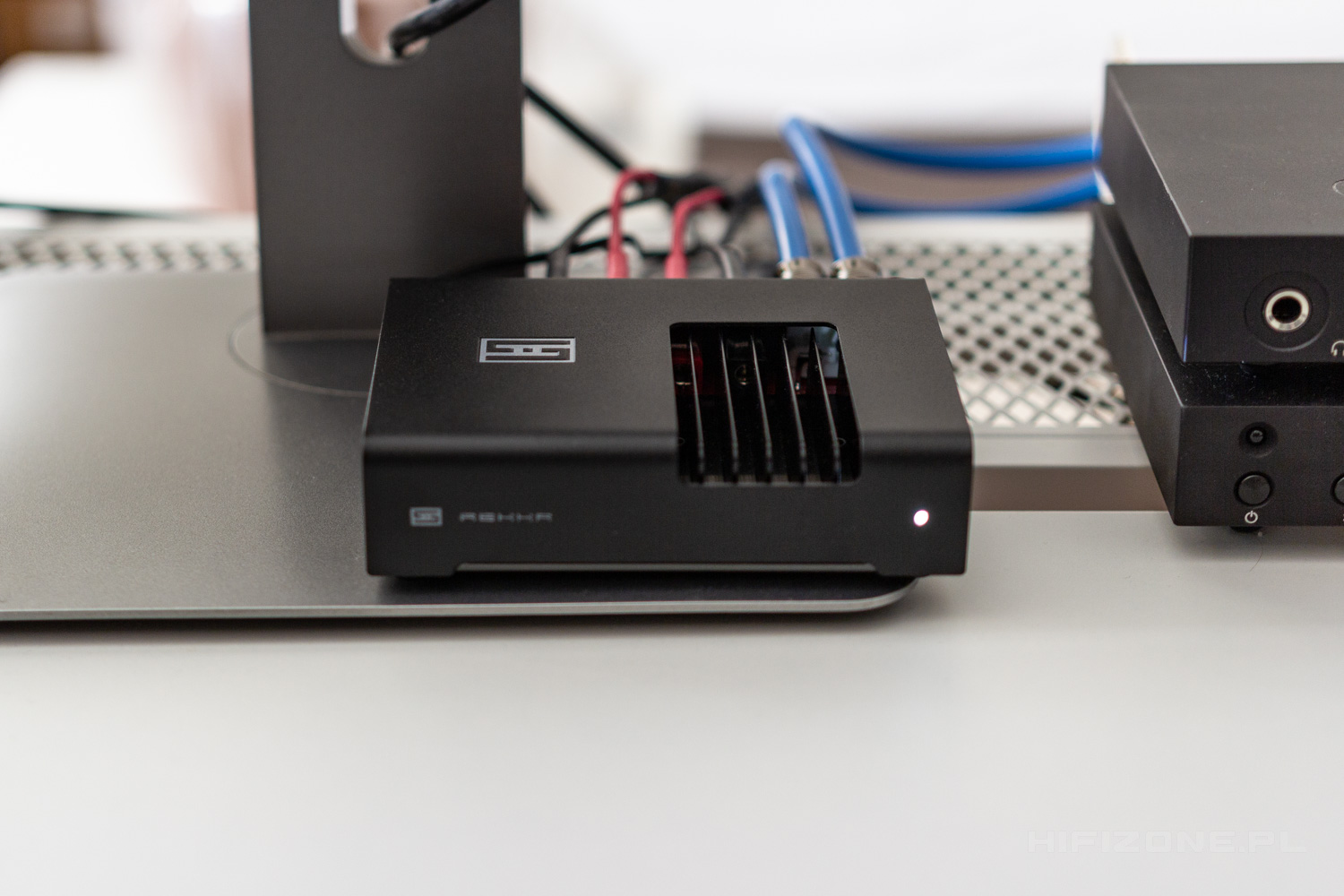
It’s also about that unforced directness, all the details being well lit here without any tendency to be over-exposed at the same time. The overall timbre, character is maybe just a slight on the delicate, subtle side of things, yet the speed and that ability to swiftly deal with the microdynamics (which is, by the way, beyond the reach of anything in this price point) shifts makes the whole presentation really alive and just so listenable. What’s more, I believe that such sound tuning, if you can call it that way, really works wonders in setups for which the Rekkr is actually made for.
Schiit Rekkr – conclusion
I believe that there will be some questions regarding how does the Rekkr and Gjallarhorn compare, so let me start from here. I believe they differ more than the size and the power ratings would suggest. And while Gjallarhorn may be as well used in the desktop environment, it’s the Rekkr that shines here. Provided, of course, that you have speakers of at least decent sensitivity. I believe that if you wanted to go all-out with the really powerful and at the same time all-balanced (DAC to power amps) desktop system, then this is actually when you might consider pair of the Gjallarhorns. Or when your another usage scenario is some serious music production or mastering and you need to have a substantial dynamic headroom (and are more in a mid-field than a near-field configuration). But for most people, considering most circumstances – that would really be an overkill and the Rekkr will do just fine.
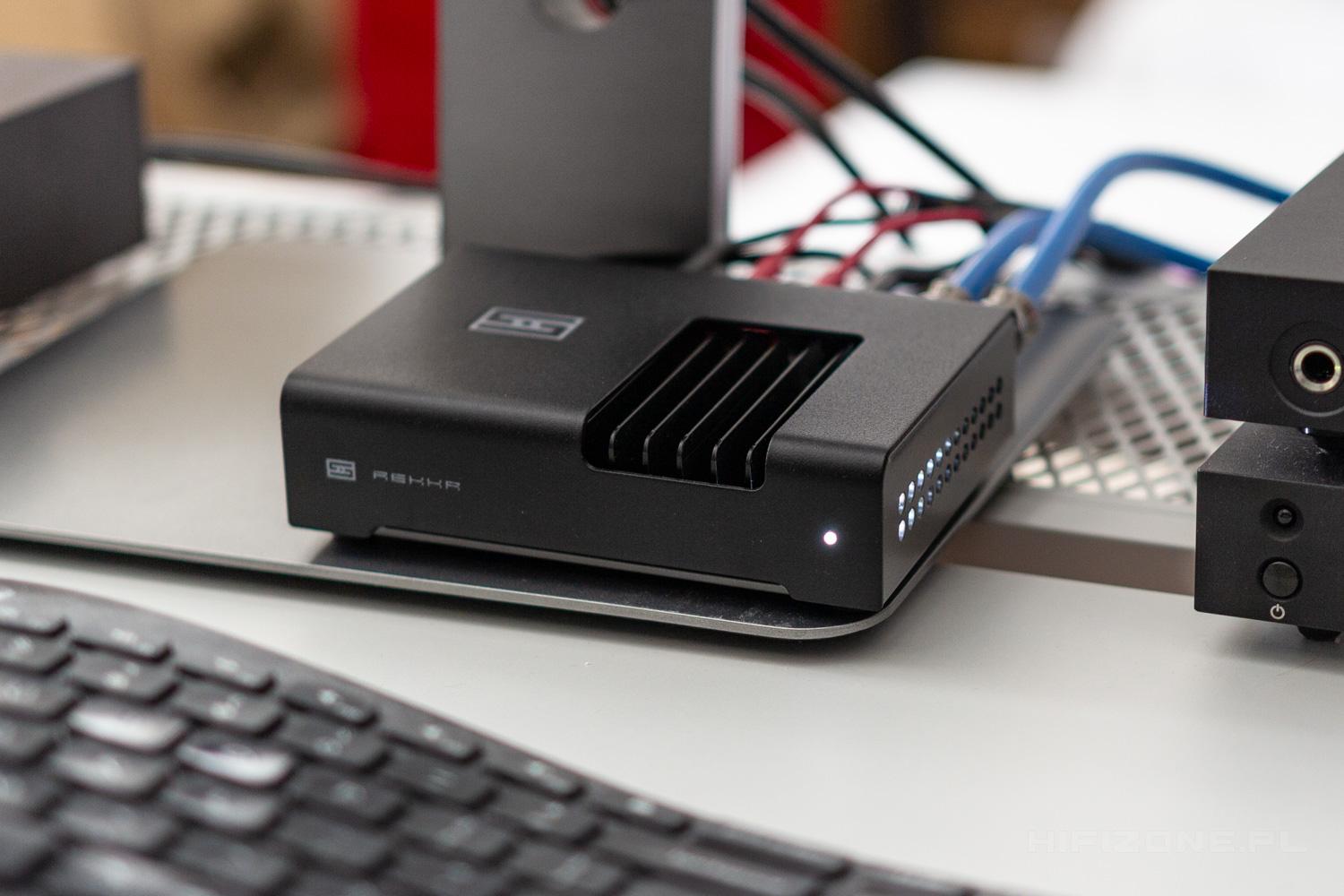
We might come back to this comparison later on this year, so let’s focus now on the Rekkr itself. From all those three pieces of audio gear from Schiit that I had a chance to lay my hands on this year – this one is indeed the most specialized and, at the same time, most unique one. And for what it is, it’s surprisingly capable. You just need to fully understand its purpose and the idea behind it to fully appreciate it. Or maybe better just listen to it, since with the right ancillaries it easily defends itself.
Last, but not least – this is a really one neat package. It’s dedicated for all those enthusiasts who know why they want a (very) small “linear” Class AB power amplifier, how to use it and where its strengths will be. It will not only not disappoint them, but will also make many people wonder what happed to that “first watt” of amplification with many other, often much more expensive and bigger gear. Because size aside, all this wattage ratings aside, the amount of sound quality that you get here simply surpasses its asking price. And for that alone, it’s an easy recommendation.
Adam Kiryszewski

Price: 149 USD
Product page: https://www.schiit.com/products/rekkr