
While we will get back to all those small – yet important – differences just in a while, there’s one thing that I would like to dwell upon a bit more. The DAC chip of choice. What’s interesting, iFi Audio uses Cirrus Logic silicon in some of their more portable devices (like the previously reviewed GO Bar and GO Bar Kensei), while the Texas Instruments parts are reserved for the bigger and actually more expensive devices. As well as for the ZEN DAC range. This is how Mike explains it:
“We have a lot of experience working with the Burr Brown True Native chipset, and have a great fondness for its natural-sounding musicality and true native architecture. We’ve certainly had great results with other DAC chips (such as the ESS chips in the uno and GO link, and the Cirrus Logic chips in the GO bar, GO blu and GO pods), but the sound of the Burr Brown True Native chipset has nevertheless become somewhat synonymous with many of iFi Audio’s products. While there are many changes in the latest generation of the ZEN DAC, it was important to us that it retain the 'signature sound’ that has made its predecessors so beloved, and so for the ZEN DAC 3 the Burr Brown True Native chipset was the right choice.”

Let me comment here a bit: obviously the DAC silicon choice is one thing and its actual application and how it will work in a certain circuit will be another. Yet still we can find – more or less, depending on a chip – some common denominators when it comes to the sound. And as for the Burr-Brown (or the Texas Instruments, it doesn’t really matter since TI actually owns B-B) – its delta-sigma chipset (which is used here) was always a bit underappreciated. Especially in the whole AKM vs. ESS discussion that seemed to be going on these last few years. It doesn’t at the same time mean that one will be definitely better than the other. Because, and we really need to emphasise this, very important is how a certain chip is used, its application. Yet still, it should be pointed out – that in the best theoretical application – every DAC chipset (or a more advanced solution) will have its more or less unique sound. We will get back to this later on, but what I can say now is that iFi made a really interesting choice here.
Coming back to all those improvements from the previous ZEN DAC version, we also have a reduction of the DC offset:
“By significantly reducing the DC offset, we benefit from a reduction in low-level distortion, improving the overall listening experience for users. However, for many listeners the most noticeable benefit of this will be the minimising of pops and clicks that can be encountered when making settings adjustments on the ZEN DAC 3.”
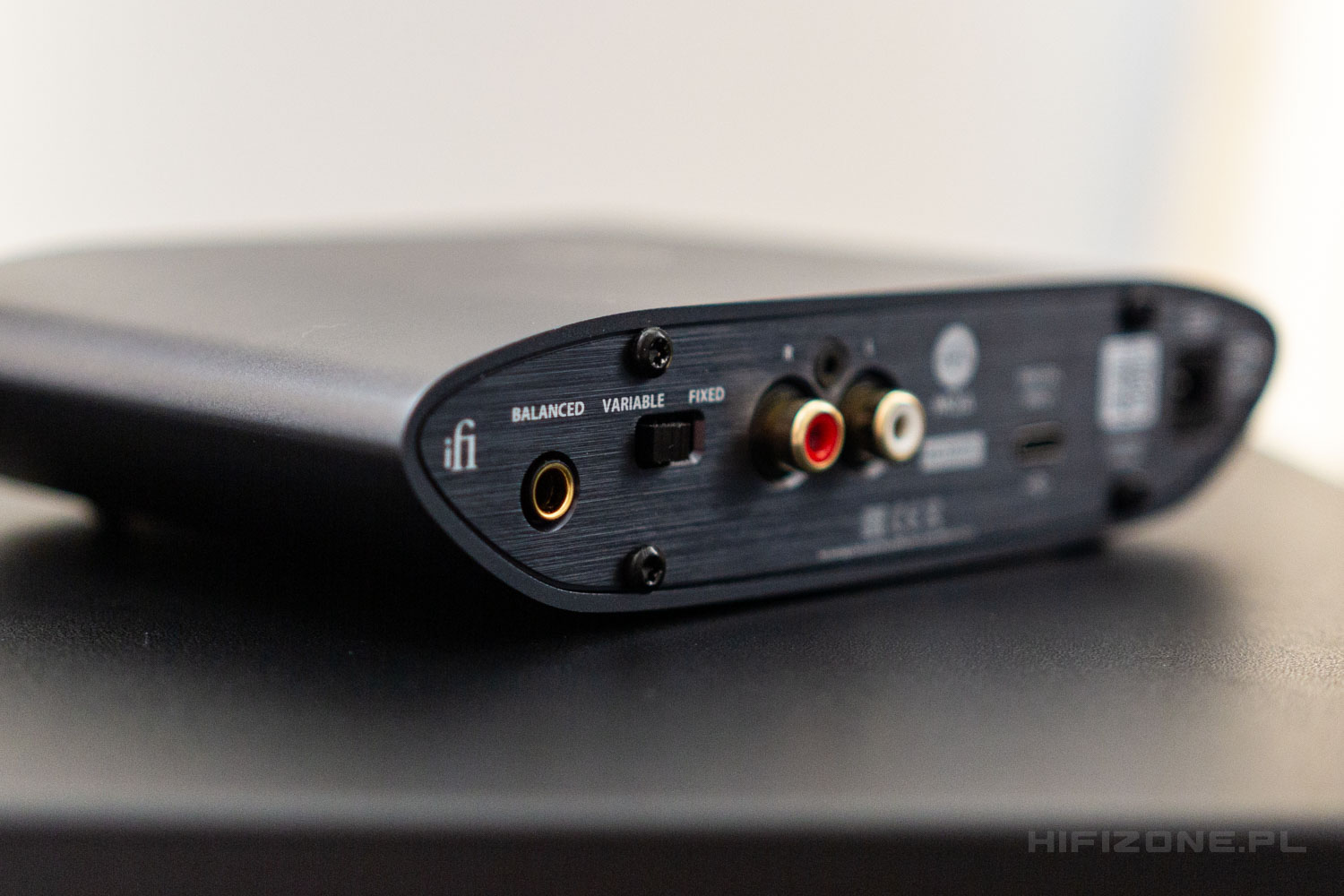
What I can add here is that this may be a really welcome improvement if someone would like to connect the ZEN DAC 3 to some really serious (and possibly many times more expensive) power amplifier. This is because such an amp would highly likely be both DC-coupled and possibly devoid of DC-servo as well. And the less DC content in the source (that might be amplificated later) is simply always better.
Especially bearing in mind the fact that the ZEN DAC 3 “has a balanced analogue stage for reduced signal noise and crosstalk. That way, we can ensure that the ZEN DAC 3’s balanced outputs offer the quality expected of a balanced connection, rather than simply offering basic compatibility.” as iFi Audio puts it. They also confirm that the op-amp used in the analogue path after the DAC is their custom OV Series operational amplifier which was specifically designed for this purpose and is another hallmark of the Southport’s company electronics.
The last thing that I would like to address here is the power supply. And the fact that we have two options of getting the power to the ZEN DAC 3. One is via it’s USB-C port, so it will draw the power via USB. Or we can connect an external PSU. In the latter case:
“when 5V DC power is provided to the unit the USB power rails are completely disconnected, ensuring that no power is sent from the source device, only data. This in turn eliminates any possible signal noise due to power being sent via USB-C.”