
The amplifier, according to the type of load – be it resistive, inductive or capacitive has additional circuit solutions implemented in three places to protect the power stage from turning off (it also protects the entire voltage/current circuitry). This solution also prevents from abrupt current avalanche excitation of the power stage (boundary values in the MHz range for the PNP and NPN pair) and it also has specifically chosen feedback modules. All this results in keeping the amplifier in the working regime of “hearable” Class A. So this solution prevents the circuit from sonically detrimental effects and keeps it working as if it were all the time in Class A – for lower and higher levels. This circuit can be defined as a “distortion killer”. Moreover, the lack (for a moment)
of bias is not the only problem regarding the emergence of distortion (transconductance of the PNP and NPN pair). The fact that a certain circuit works in Class A doesn’t make it completely free from the problems of dynamic transmission (from input to output). Those dynamic distortions (TIM) also happen in the amplifier circuits and in subsequent stages, starting from turning off the input stages, errors of the voltage stages and only finally turning off of the current (power) stage. To avoid those, the AMP-05 was meticulously designed with its every stage in mind.”

While a bit on the longer side, this explanation also means that the designer definitely knows what he’s doing. I also asked about the negative feedback in the AMP-05 SE:
“The amplifier has a global feedback loop that is shallow for the power stage. This is a voltage feedback loop. Local stages have their own negative feedback loops that affect the certain points in the linear spectrum, which sums up to how the whole amplifier works”.
The last thing that I asked about was the fact that we have the balanced outputs without having the balanced inputs:
“Outputs for headphones with the balanced cabling is somehow of a quasi-solution. Amplifier going out with its signals from the SE stage has the + polarization routed directly to the output sockets, whereas the minus polarization is routed indirectly to the “artifical ground” circuit. The negative terminals are not in any way connected and they live their own current life locally”.
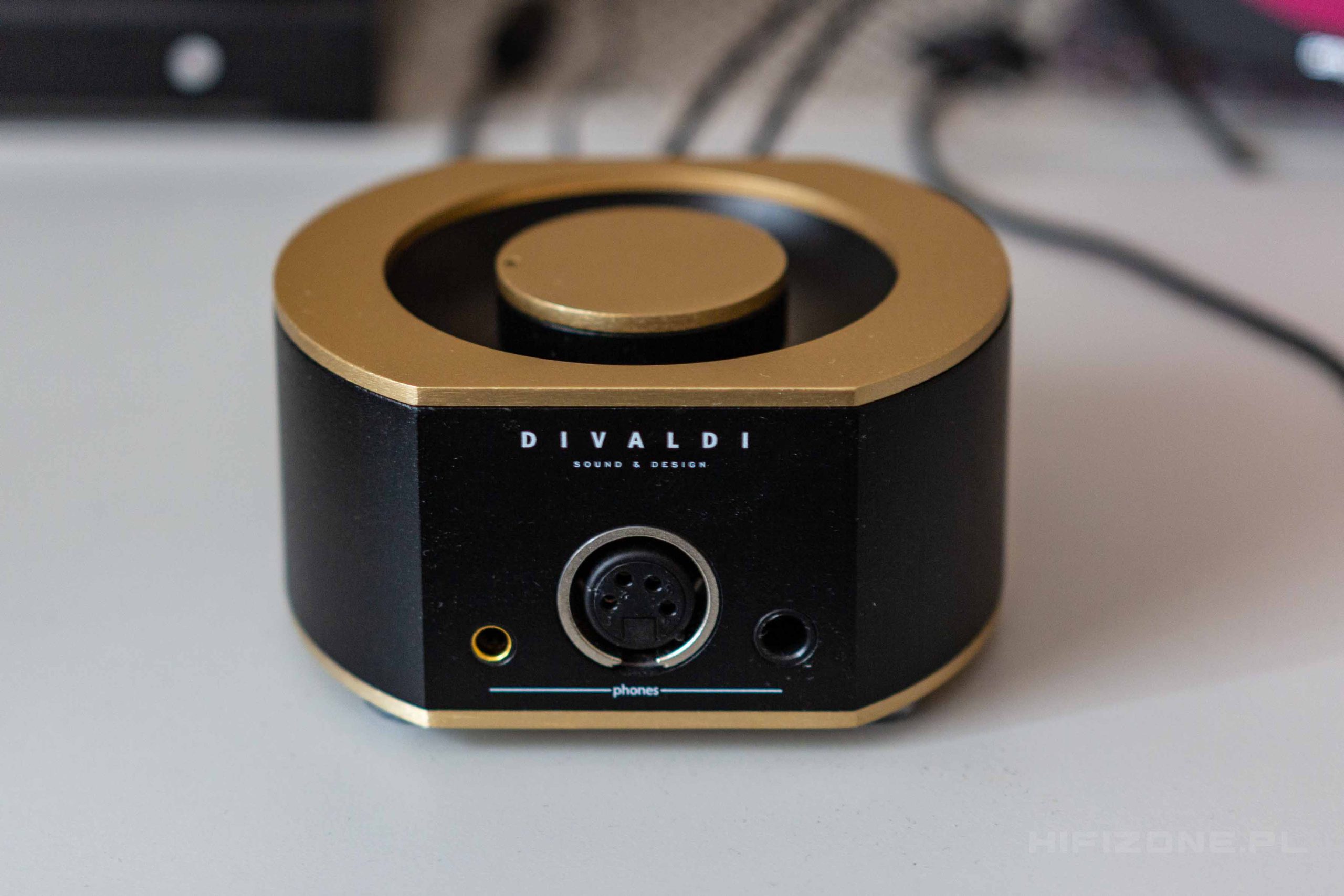
I would also like to mention two other things. The differences between the AMP-01, AMP-02 and the new AMP-05 version are really big. We have completely new printed circuit board and a new amplifying circuit. And also selected from scratch new components, even including precisely chosen width of the traces on the PCB. Additionally, while the amplifier is powered by a single 16V external power supply unit, inside it this is converted to two separate symmetrical rails that are separate for each channel. Soon there will be available external and much better PSU that will have the same design as the amplifier and will also sport an R-Core transformer. I proceeded with my listening session using the standard PSU, since it would be most interesting for everyone how the AMP-05 SE sounds directly out of the box.