
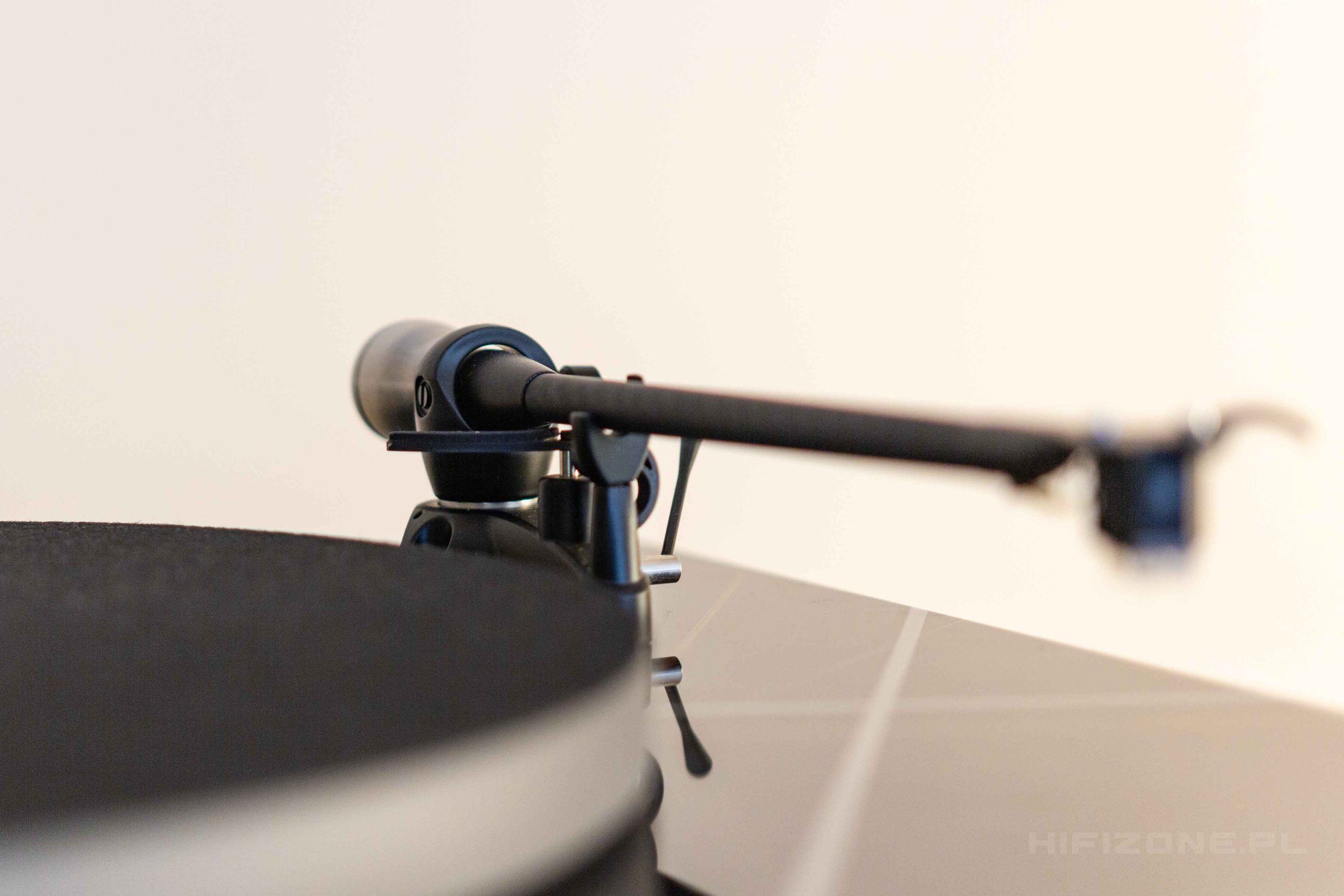
The last thing that I would like to cover from the design perspective – would be the Auris new T-809 tonearm that is mounted on the Blues. This is one of their recent designs and features some concepts that the company is using in their more expensive tonearms. It is made of aluminium, and the only thing that is not present here is the VTA adjustment. But please also bear in mind that the Blues is an affordable turntable and in this price range you simply can’t have everything. Yet what you get is also another important piece of the puzzle, which in this case is an acrylic platter that is a really valuable addition.
Auris Audio Blues – the sound
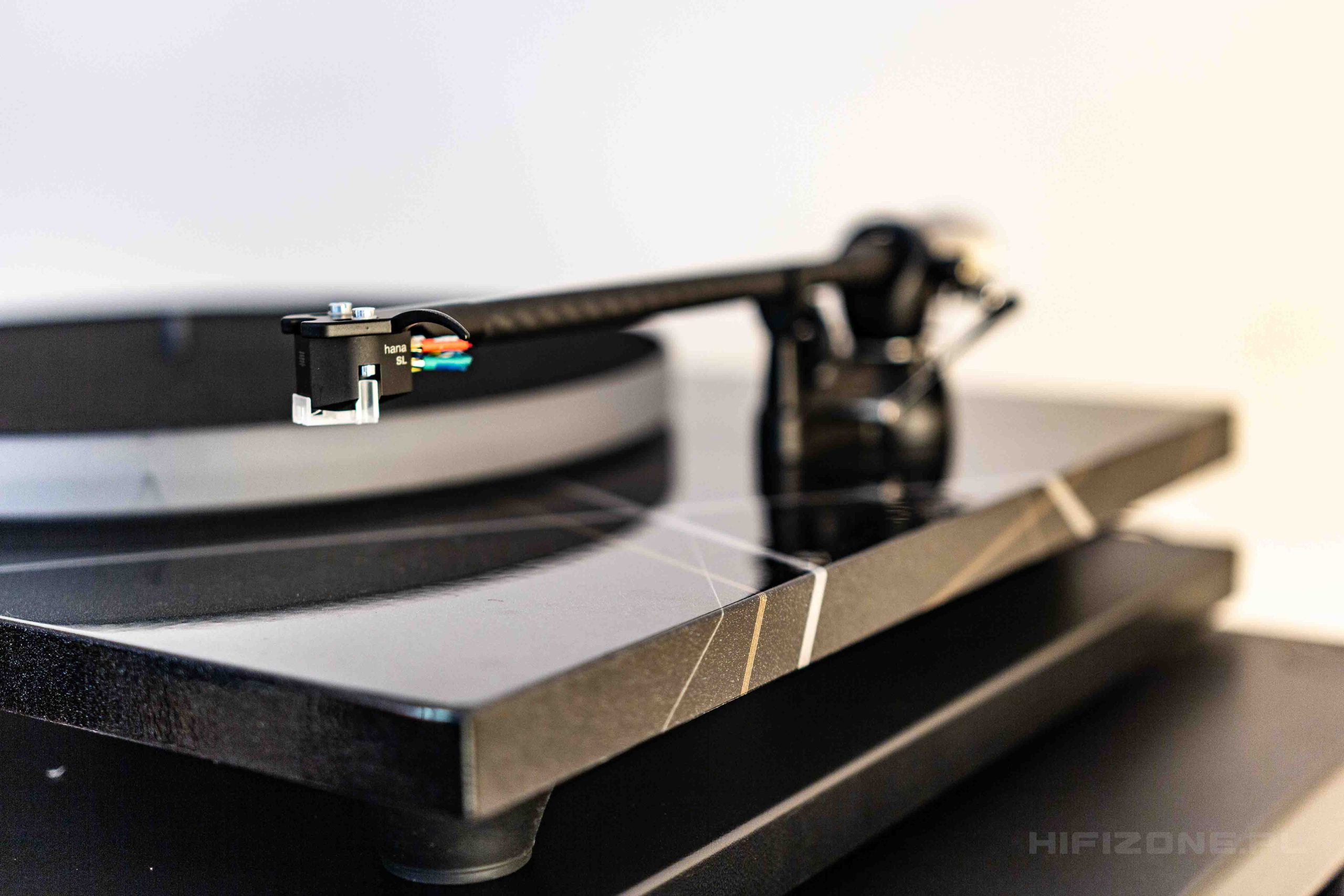
First things first, please notice that the actual sound of the turntable is in reality a combination of a few ingredients. The turntable itself is obviously one thing, yet what is also important is the tonearm and – you’ve guessed it – the cartridge. I’ve used two cartridges here that may possibly be a bit on the expensive side, yet those combined will give us a complete picture of what the Auris Audio Blues really is and how it performs. One of those cartridges was the top-of-the Moving Magnet line from Ortofon, 2M Black to be precise. The other one was the first version of the Hana SL low-output moving coil cartridge that is also widely regarded as one of those great sounding yet still affordable options, especially if you want to jump on this whole Moving Coil bandwagon.
Then there will be of course other things in play, like the phono stage. In this case I used the Auris’ own Phonio Light preamplifier that boasts both the MM and MC signals amplifying capabilities, together with the resistance and capacitance adjustments. We will post the review of the Phonio Light separately since this is another piece of gear that warrants out attention. Then there is also another thing that may be of some importance, and that would be the positioning of the turntable. And by that, I mean not only getting it to be perfectly horizontal (there are many not that very expensive things for it, and also remember that Blues has adjustable feet that make the whole setup much easier), but also getting some king of a stable surface beneath it. In this regards the Blues was placed at the top shelf of my Solidsteel rack. And I also used it with a combination of the Tewo Audio anti-vibration platform (review on this also coming out soon). I will include some of the thoughts on this later on in this review. And now – let’s get to the gist of the matter.
I started my listening sessions with one of the recordings that I do know very well. It was the first solo performance of the former Eurythmics’ vocalist – Annie Lennox. The “Diva” album is really well-recorded yet the sheer scale and the way the Lennox’s voice is recorded may pose some serious problems to many, even hi-end audio equipment. Because when the sound is too soft, it will simply lack the emotional content here. And any verging on the brittle side of things will, on the other hand, cause everything to sound just too harsh and (this is especially obvious on the digital front-ends of lesser quality where the delta-sigma modulators just don’t cope) sometimes even unlistenable. And then you have the propulsive rhythm on some tracks here. Auris Audio passed this test with flying colours. Even from the first track, which will undoubtedly here be “Why”, it was clear that this is not any kind of a budget turntable, but something much more than that. The first thing that I noticed was the kind of stability and the sense of occasion that it provided here. It was not only about the rendition of the Annie’s voice, but rather it was the cohesiveness of the whole, the stability of the musical image and that feeling that everything just seems right here.
Then there’s more. On one of my favourite tracks of this recording, “Precious”, Auris Audio Blues provided not only propulsive bass lines married to a very well defined midrange and treble. But also, a sense of holographic space that was thrown between and beyond speakers that was also noticeable. And then there was the voice, the actual midrange. I would like to comment more here, since the sound of Blues as a whole may be described as organic. And at the same time still not only very dynamic but also having that natural kind of rightness and stability to it. It’s not too soft, this is not a turntable that will play everything in the same way, but rather differentiate records in a quite unwavering manner.