
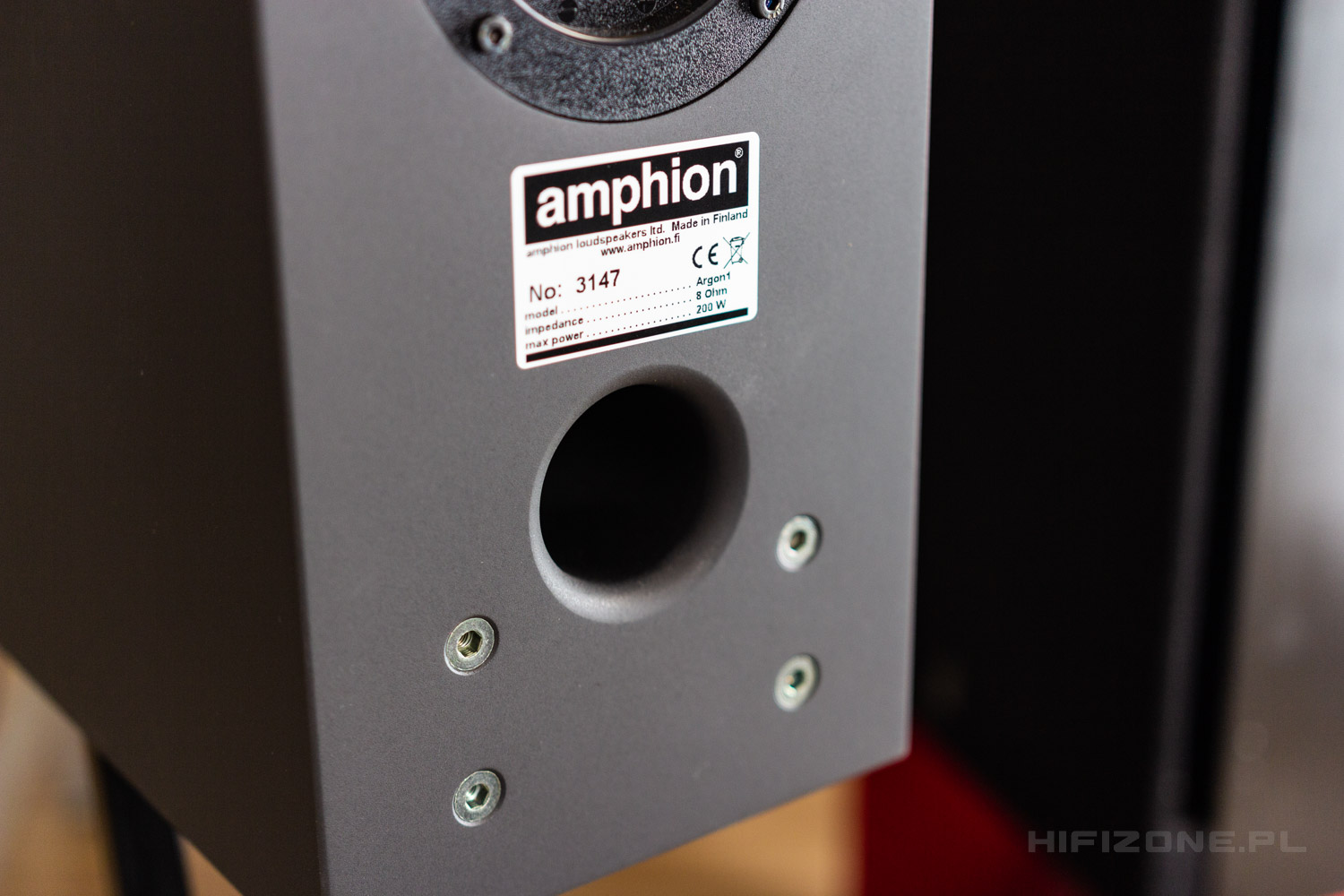
Summing all things up here, we have a very interesting speakers that slightly vary from what we may be accustomed to, yet which are by no means a whim of the manufacturer. And that also have their rational and logical explanation. Nice additional accent is a well-profiled bass reflex port that is an integral part of the enclosure. This is also worth noting, since many companies would simply put a plastic part here and call it a day. We also have the sponge plugs for these ports and the speakers themselves can be easily mounted on the wall since they have mounting ports around the bass-reflex port.
Amphion Argon1 – the sound
The designer of the Amphions wrote to me when I was previously reviewing the Argons3S that his philosophy was – obviously oversimplifying a bit here – that his speakers should open a wide window for the music. It’s hard not to agree with this when listening to the Argon1 model. Because in the case of the Finnish speakers it is right from the beginning that we have a very strong notion that they try, as much as they reasonably can, to not stand in the way of the music and just disappear from the entire picture. It’s also worth noting right from the beginning that we are not dealing here with your typical studio-monitor-like sound that just may have a tendency to dissect the sound and try too hard to provide as much detail as possible.
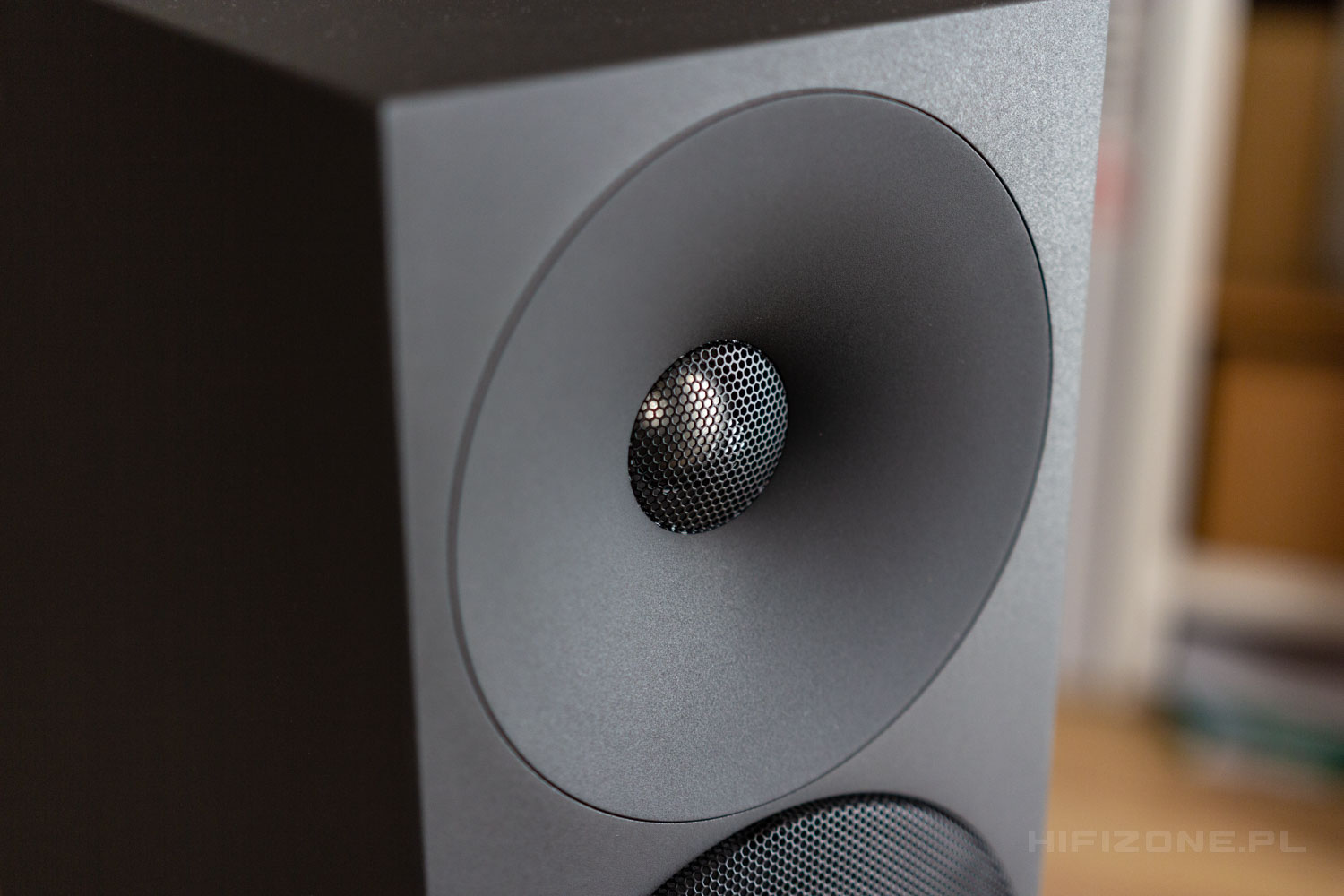
There is also another interesting thing. Because when we look at the membrane materials in the drivers and because of this (or due to certain stereotypes that still prevail and make us assume that loudspeakers with such diaphragms will sound in a certain way) we will expect a sound that would be “metal” in any way – this is not the case here. Amphions sound in an open way, let they are smooth, there is nothing bad going in the higher midrange or lower treble region that may suggest any drivers resonances here. And the integration of those drivers is actually just great, seamless. And, what’s even more interesting is that overall tonal balance is set so that even when placed away from the back and side walls – there will be no shifting of the entire frequency spectrum towards midrange or higher registers. Another thing would be that this is not any kind of rickety sound. Nor any type of presentation that would emphasise too much leading edges of the sound, there’s no overemphasizing of them. Because when it comes to its overall shape, I would say that it’s very well balanced between the detail levels, fluidity and smoothness. And even if there appears any kind of excessive roughness, it will be rather coming from the rest of “earlier” playback chain elements. And not from the Finnish speakers.
I started my listening sessions with electronic music repertoire with quite a wide spectrum. On the “Sedatin Sitar” by Organic Dreamers Amphions showed very good, especially for such a small speaker’s ability to throw a soundstage. It was build rather deep yet it never seemed to be coming from such a small speakers, which often happens with small monitors. The whole effect was helped by the bass that was very believable. It was surprisingly well defined and differentiated, especially for speakers with bass-reflex enclosures. Generally speaking, when we consider the lowers registers tuning in Amphions here there is neither an attempt to get the lowest bass extension possible, nor to have the bass that would be too contoured yet without the proper and palpable weight.